
Travel guide
Lunar New Year’s Eve Rituals through a local’s lens in Hoi An 2026

Hi, I’m Tom. This is the first blog post on this website—and it’s also the most “home” story I can write.
I grew up in Hoi An Ancient Town. When I’m away, I miss its quiet mornings. When I’m here, I forget how loud it can get at night—especially during Tet, which is the Vietnamese name for the Lunar New Year (the biggest holiday of the year in Vietnam).
The moment that matters most is Giao Thừa—Vietnamese for the midnight transition between the old year and the new one. I’ll mention that phrase once, because you’ll hear it everywhere tonight. After this, I’ll simply call it Lunar New Year’s Eve midnight.
This post is a long, practical, story-style guide for travelers who want culture without the textbook voice. I’m not trying to speak for every family—Tet changes by region, religion, and even by house. I’m only sharing what I saw, what I did, and what locals around me do every year.
Quick context for travelers: In 2026, Lunar New Year’s Day in Vietnam falls on February 17, and the public holiday period can run for multiple days around it.
A simple midnight timeline
If you’re visiting Hoi An on Lunar New Year’s Eve, this is the rhythm you’ll feel:
- 10:30–11:30 PM: households and businesses finish setting up the altar and the midnight offering tray
- 11:30 PM–12:10 AM: incense and prayers; some families do it before midnight, others right after
- 12:00 AM: fireworks (where available) + the first wave of greetings
- 12:10–12:30 AM: burning joss paper (paper offerings) outside; some families do light “cleansing smoke” in the home
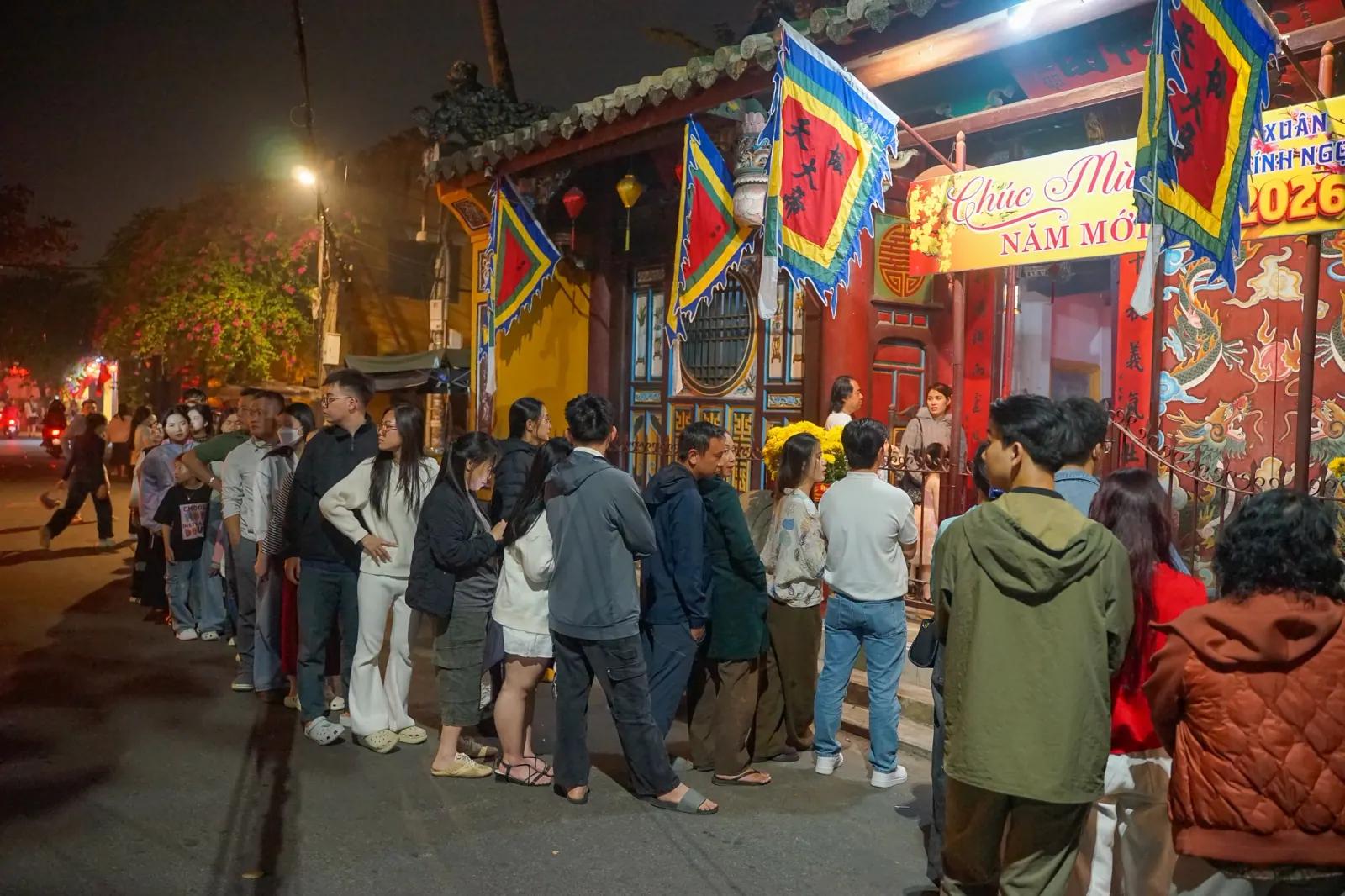
- 12:30–2:30 AM: temple lines—very real in Hoi An Ancient Town
- After that: first-footing at home, then the long season of visits and lucky money
Now I’ll walk you through each step the way it happened for me.
1) The midnight offering tray
In English, I’ll call it the midnight offering tray. In Vietnamese, you’ll hear people say “mâm cỗ cúng giao thừa”—a full tray (sometimes a full table) prepared for the Lunar New Year’s Eve midnight ritual.
This is the emotional core of the night. The street can be noisy, but the altar area feels like a quiet room inside your chest.
The purpose is simple:
- to thank the old year
- to honor ancestors and household spirits (depending on the family)
- to ask for safety, smooth work, and fewer obstacles in the new year
In Hoi An, you’ll see this at private homes and also at local businesses. Some families go all-in with home-cooked dishes. Some keep it minimal: fruit, tea, incense, and a few symbolic items.
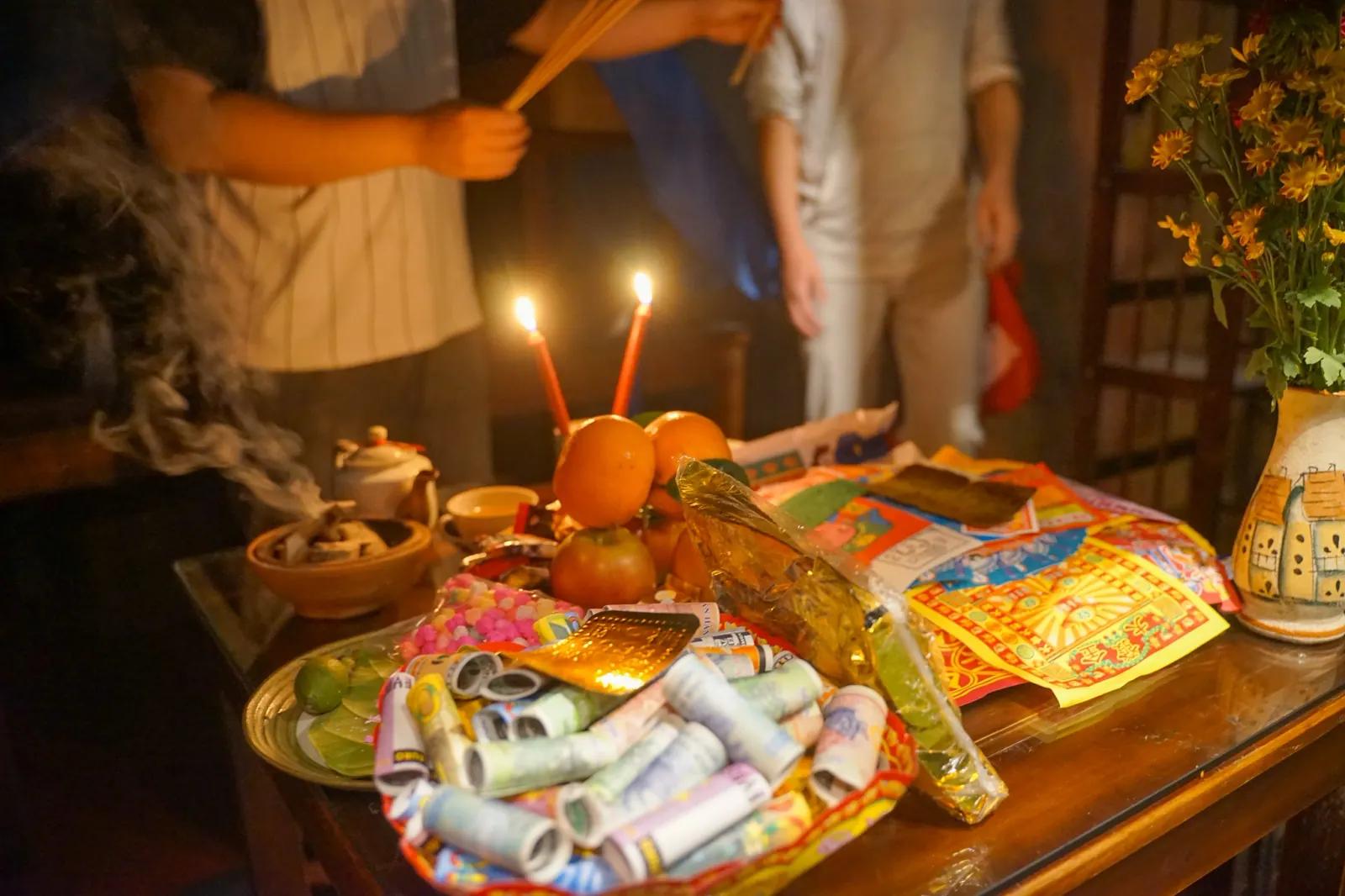
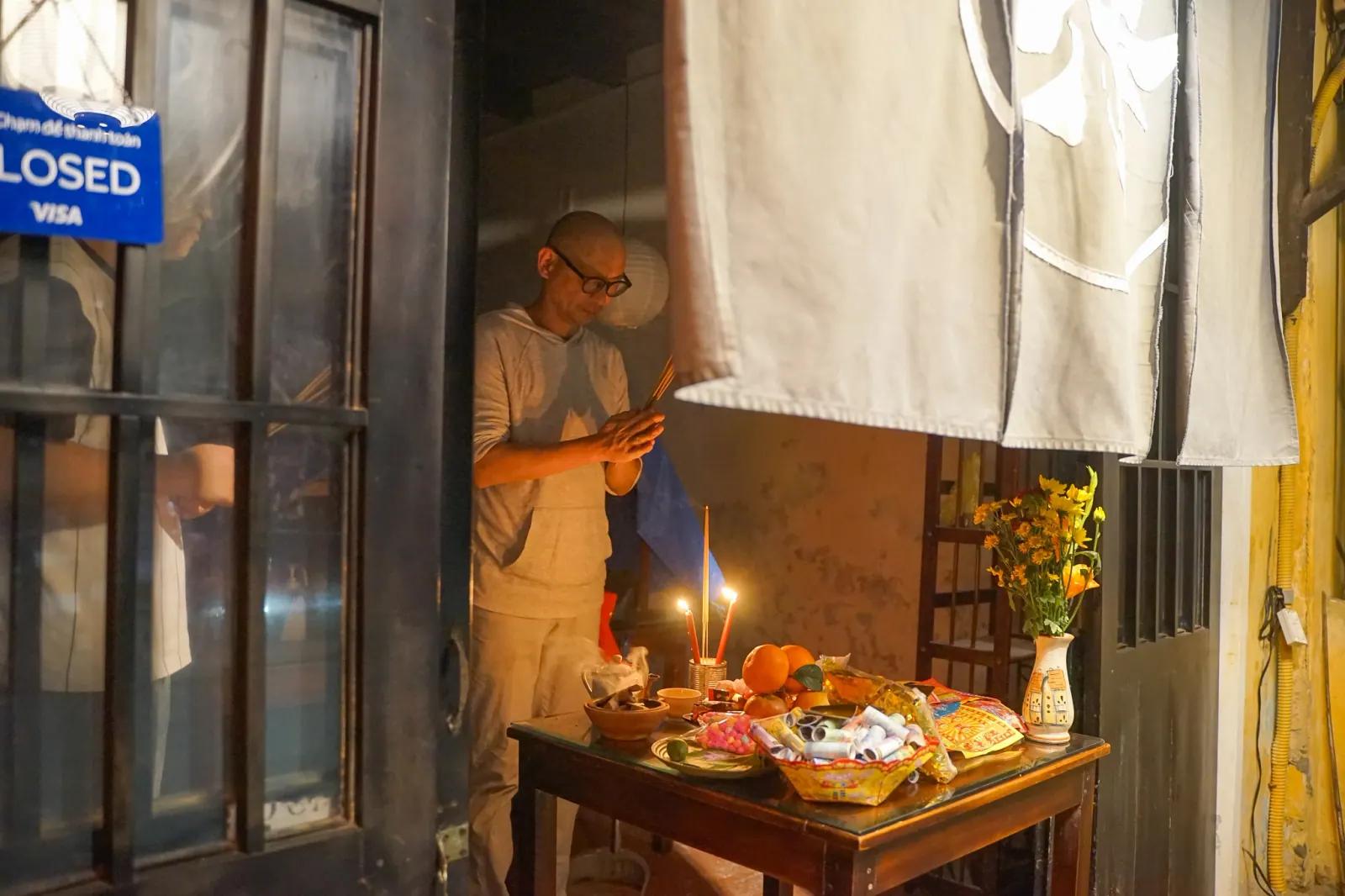
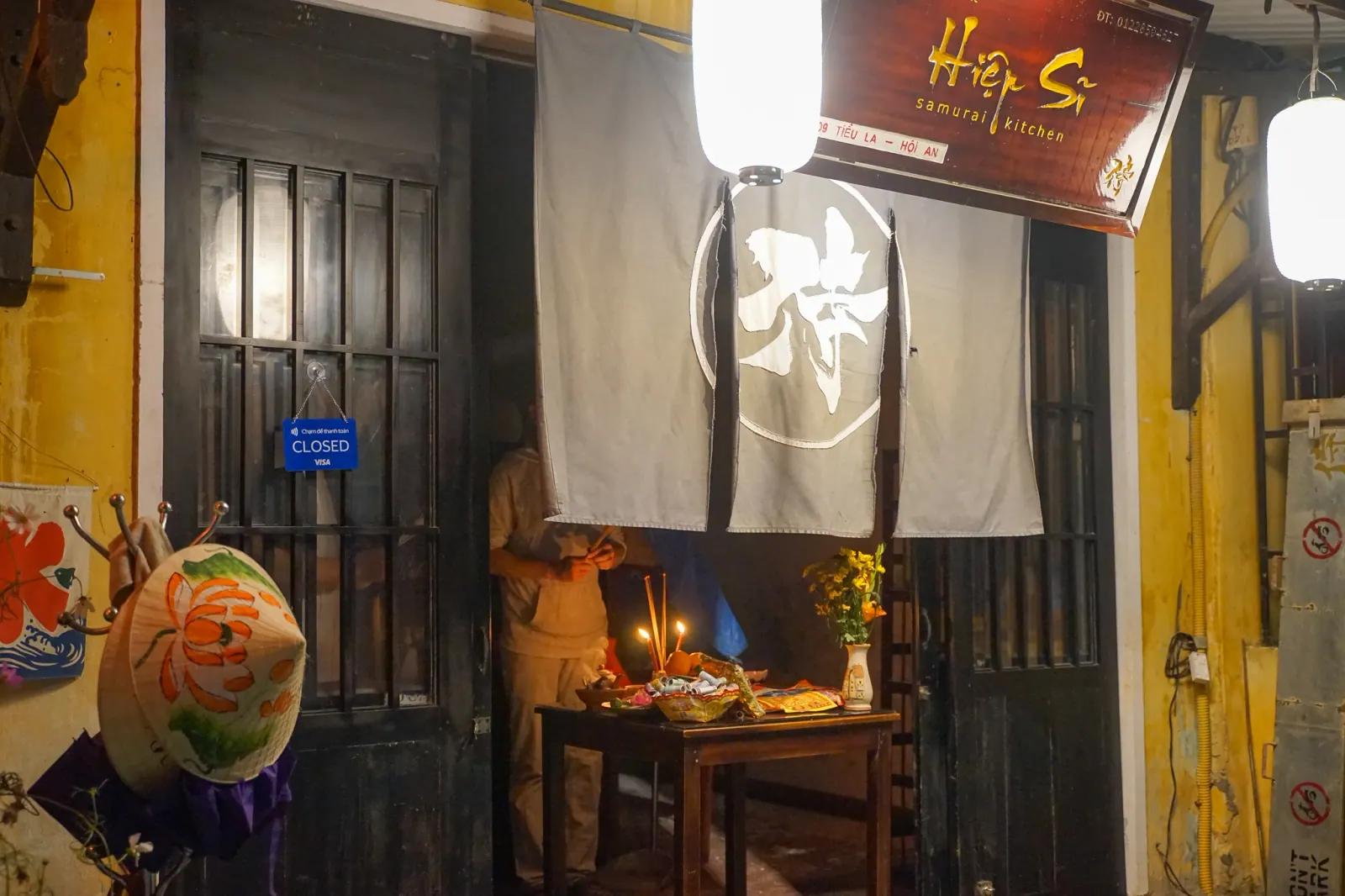
The place in my photos
One set of photos was taken at Samurai Kitchen (09 Tiểu La, near Hoi An Market), with the restaurant’s owner Genta Miyagawa.
2) Incense, home cleansing, and joss paper
Incense and prayer
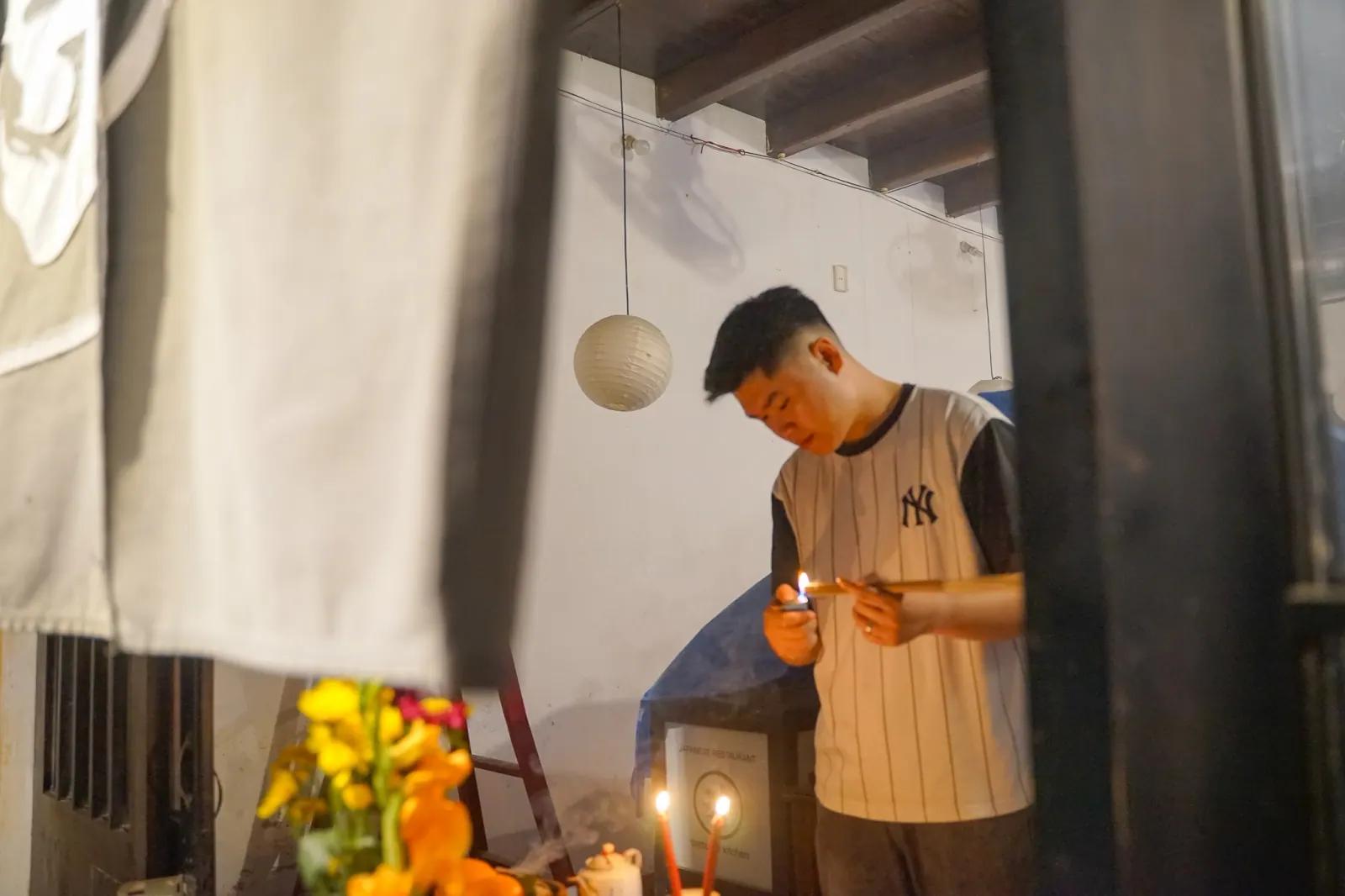
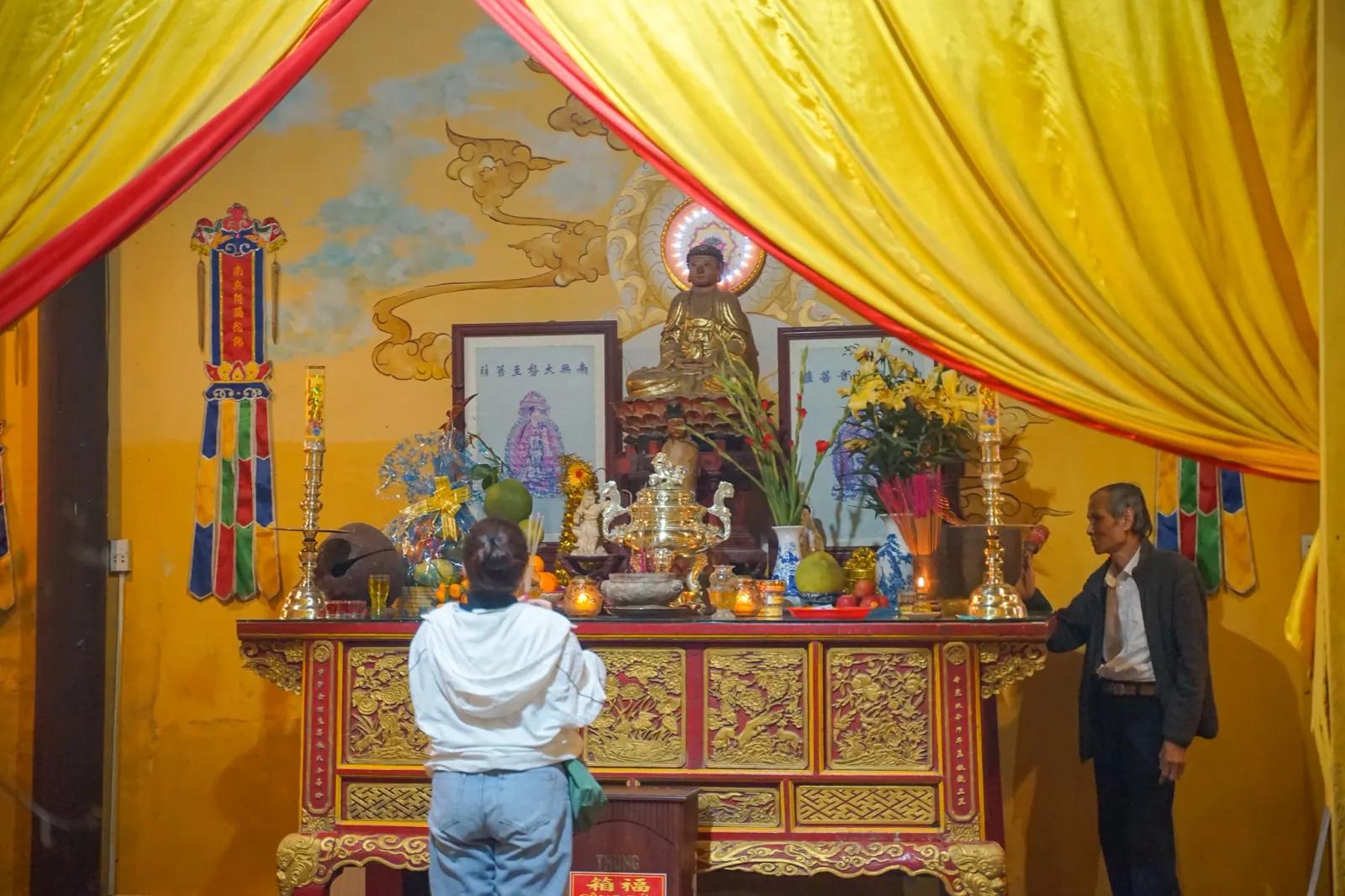
Incense is the most visible signal of Tet night. You’ll see people hold incense sticks with two hands, pause, bow, and speak quietly (or silently).
If you’re a visitor: it’s okay to watch, but don’t step between a person and the altar. Think of it like walking through someone’s conversation.
Home cleansing smoke (agarwood)
You’ll also hear “trầm hương”—agarwood incense. Many families burn it lightly to make the home smell clean and “fresh” in a spiritual sense, like resetting the air after a long year.
Some do this before midnight. Some do it after burning paper offerings outside. It depends on the household.
Joss paper (paper offerings)
Vietnamese families often prepare joss paper—paper items burned as symbolic offerings. In Vietnamese, this is “vàng mã.” I’ll use joss paper from now on.
In markets, you can buy sets already packed with paper “money” and printed wishes. Even if you don’t share the belief system, you can still understand the intention: people are trying to take care of their family—seen and unseen—and start the year with respect.
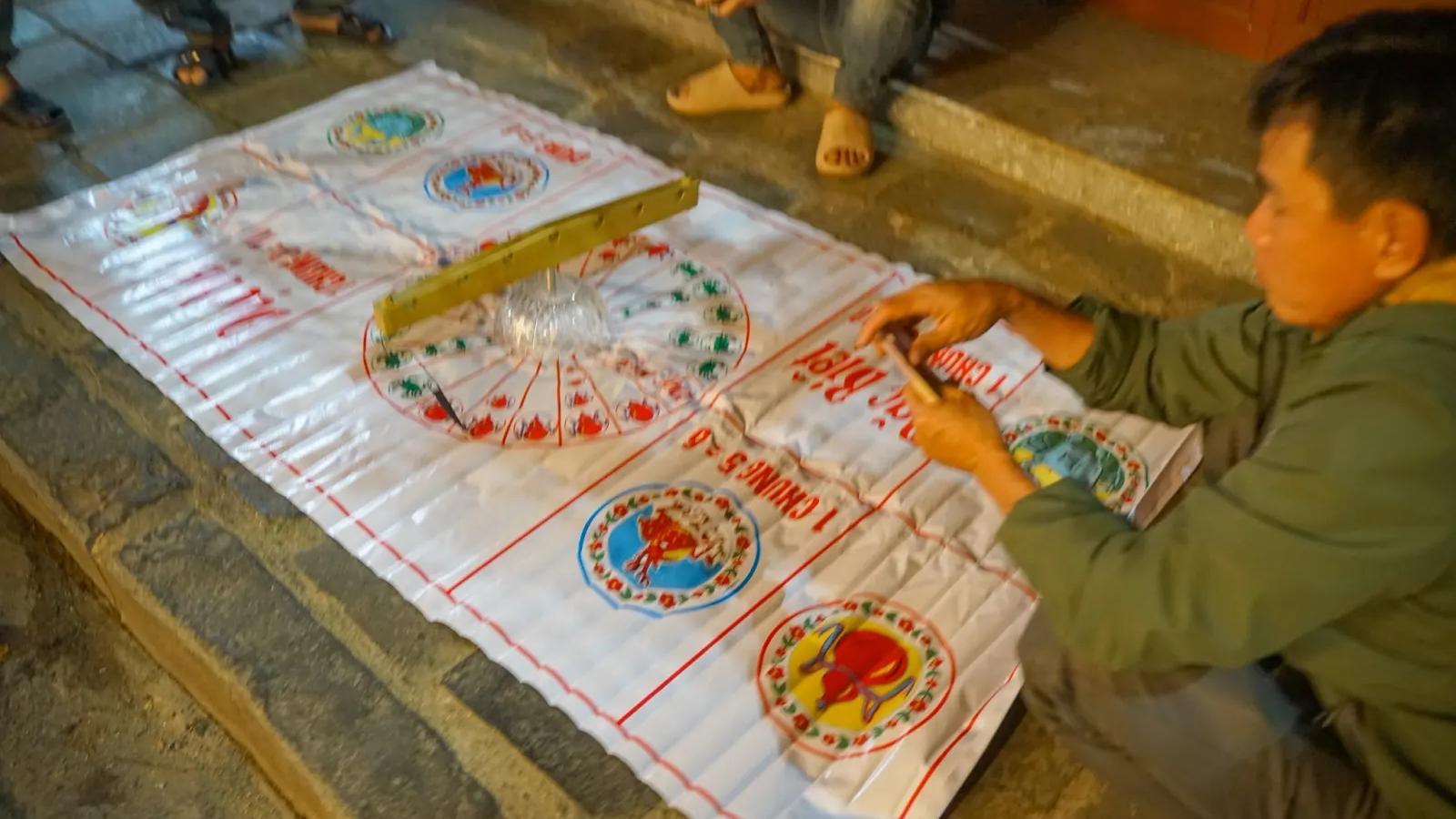
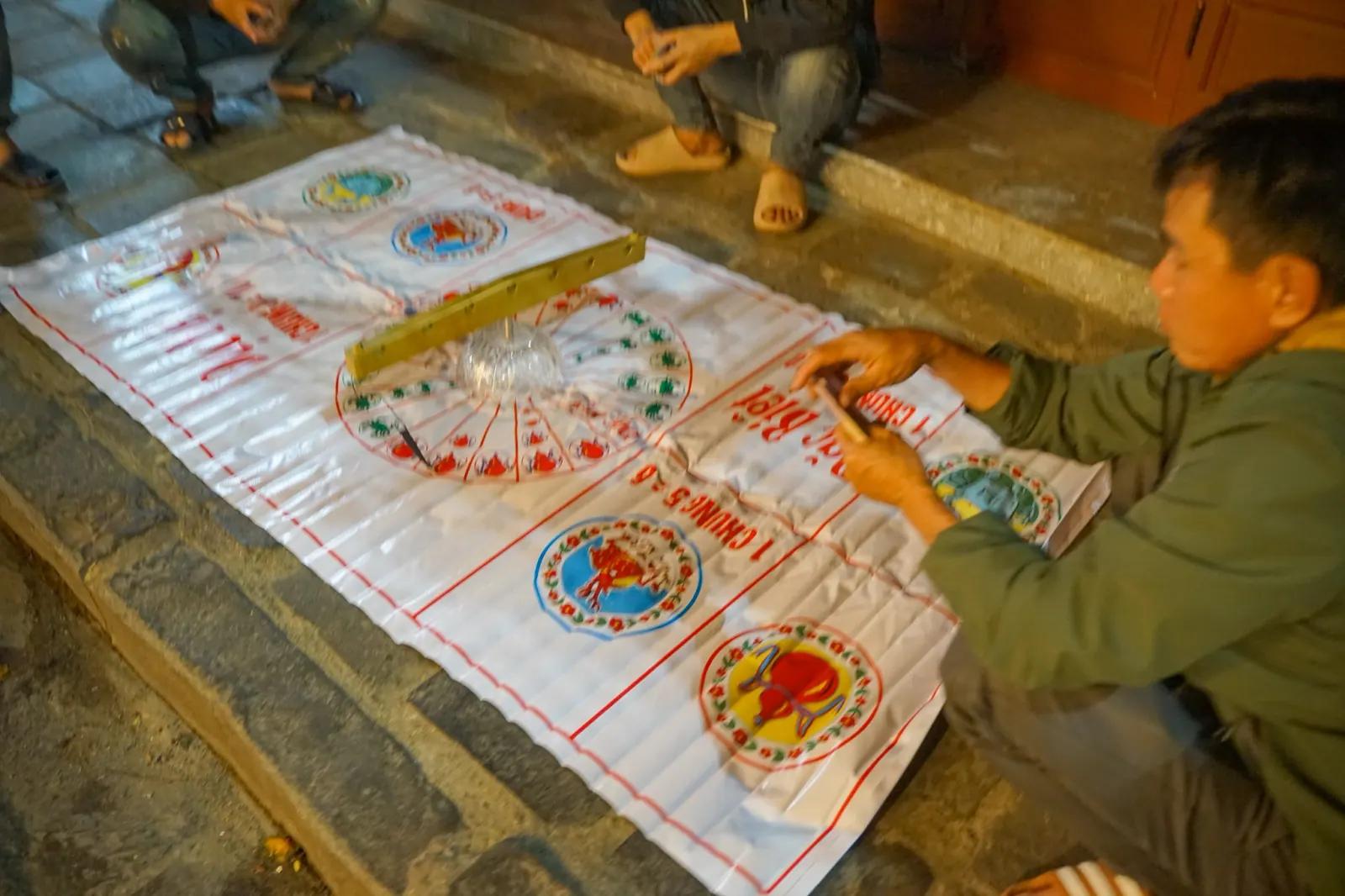
3) Burning offerings + scattering small “lucky” items outside
After prayers, many families burn joss paper outside (often in a metal pot or a safe burning area). This is usually a short ritual, but it concentrates a lot of meaning.
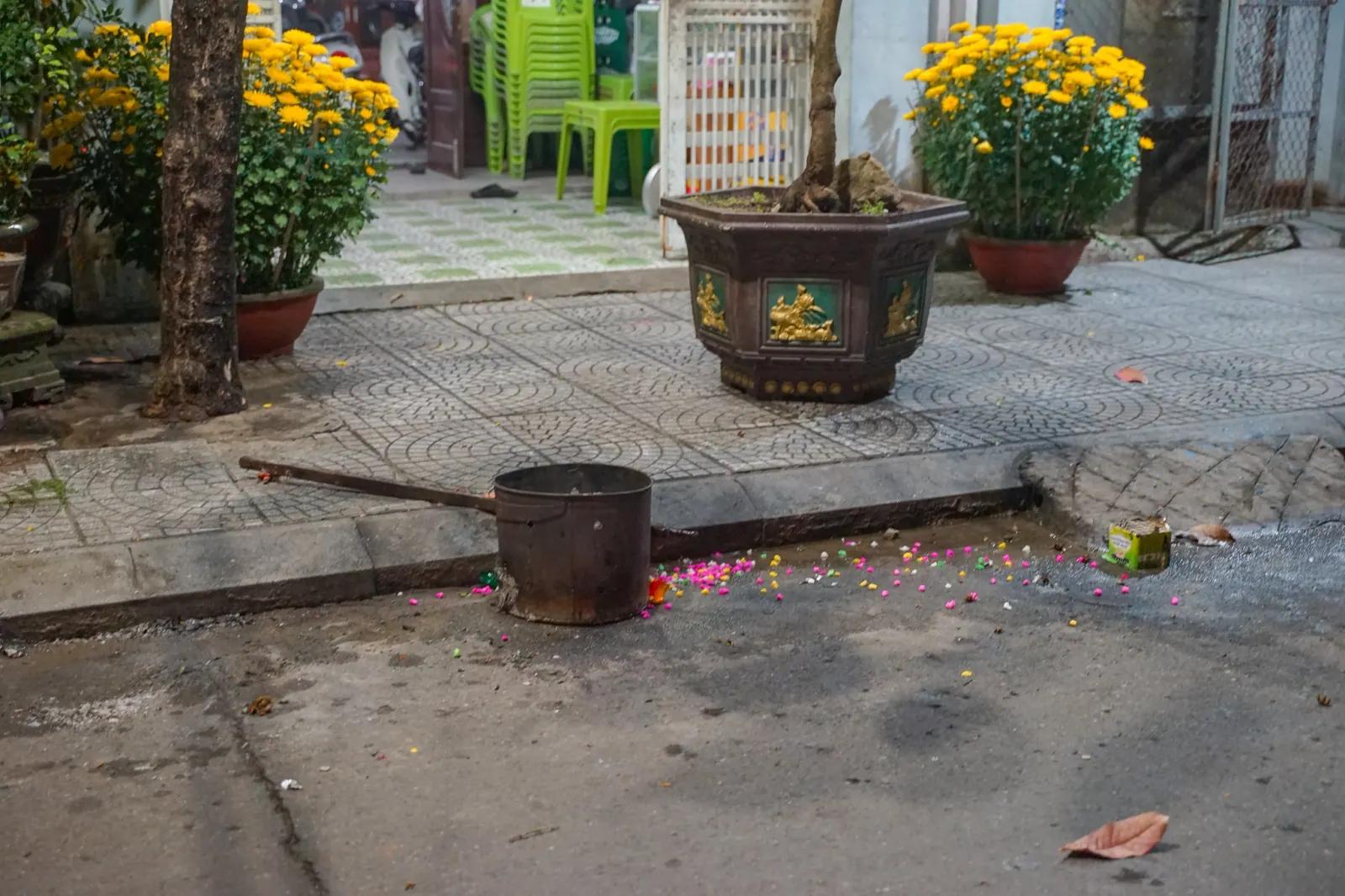
Then comes a detail many travelers notice: people scatter small things outside—often a pinch of salt or rice, and in some homes you’ll see betel and areca (the traditional pairing used in many Vietnamese ceremonies), and sometimes puffed rice.
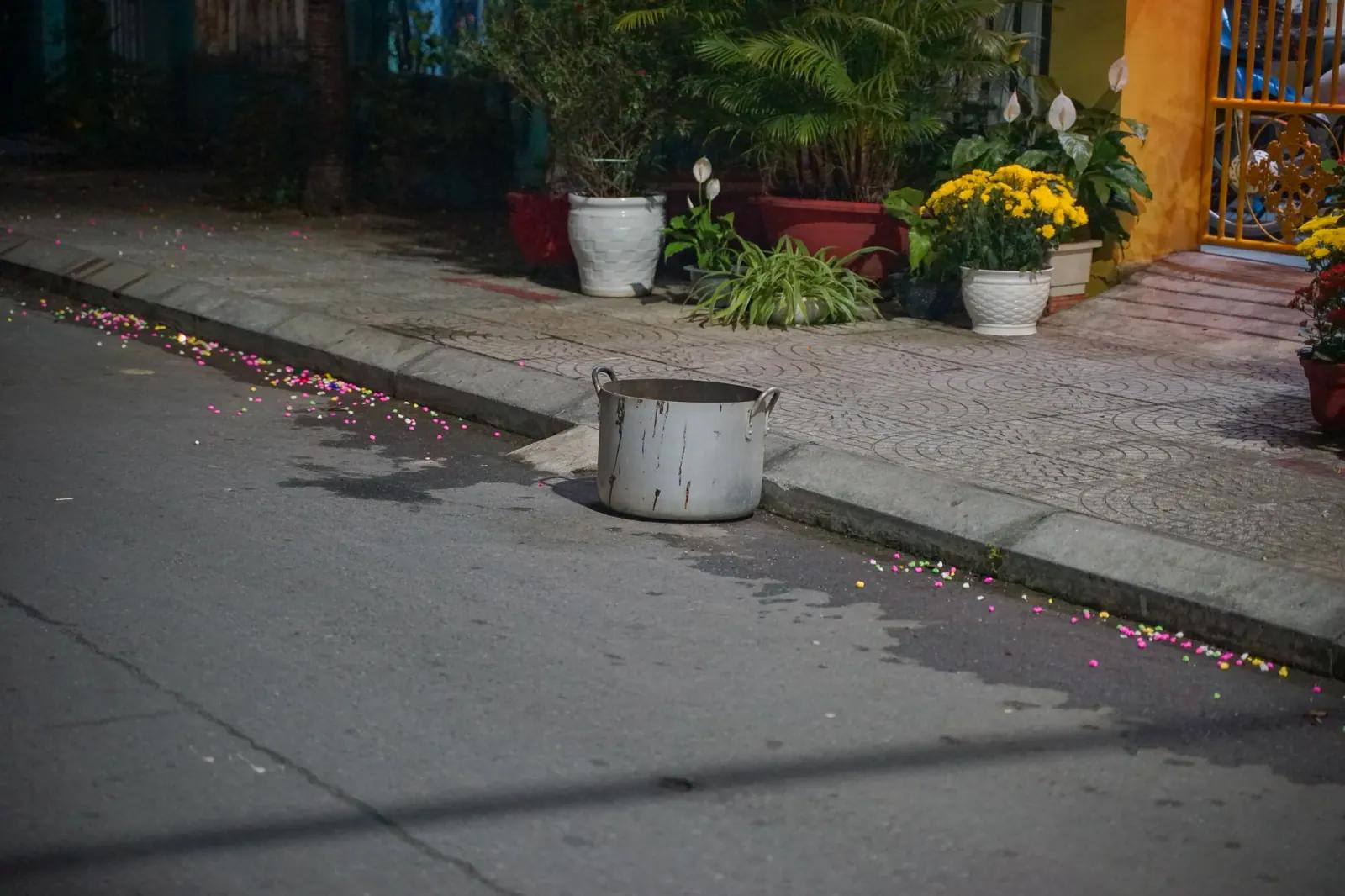
I’m careful here because each family explains it differently. But the common local logic is:
- salt / rice: symbolic protection + abundance (warding off “bad” and inviting “enough”)
- betel and areca: respect, sincerity, and the “proper” ceremonial tone (these appear in weddings, ancestor worship, and major yearly rites)
- puffed rice: a light, simple offering—something small that still carries “food” symbolism
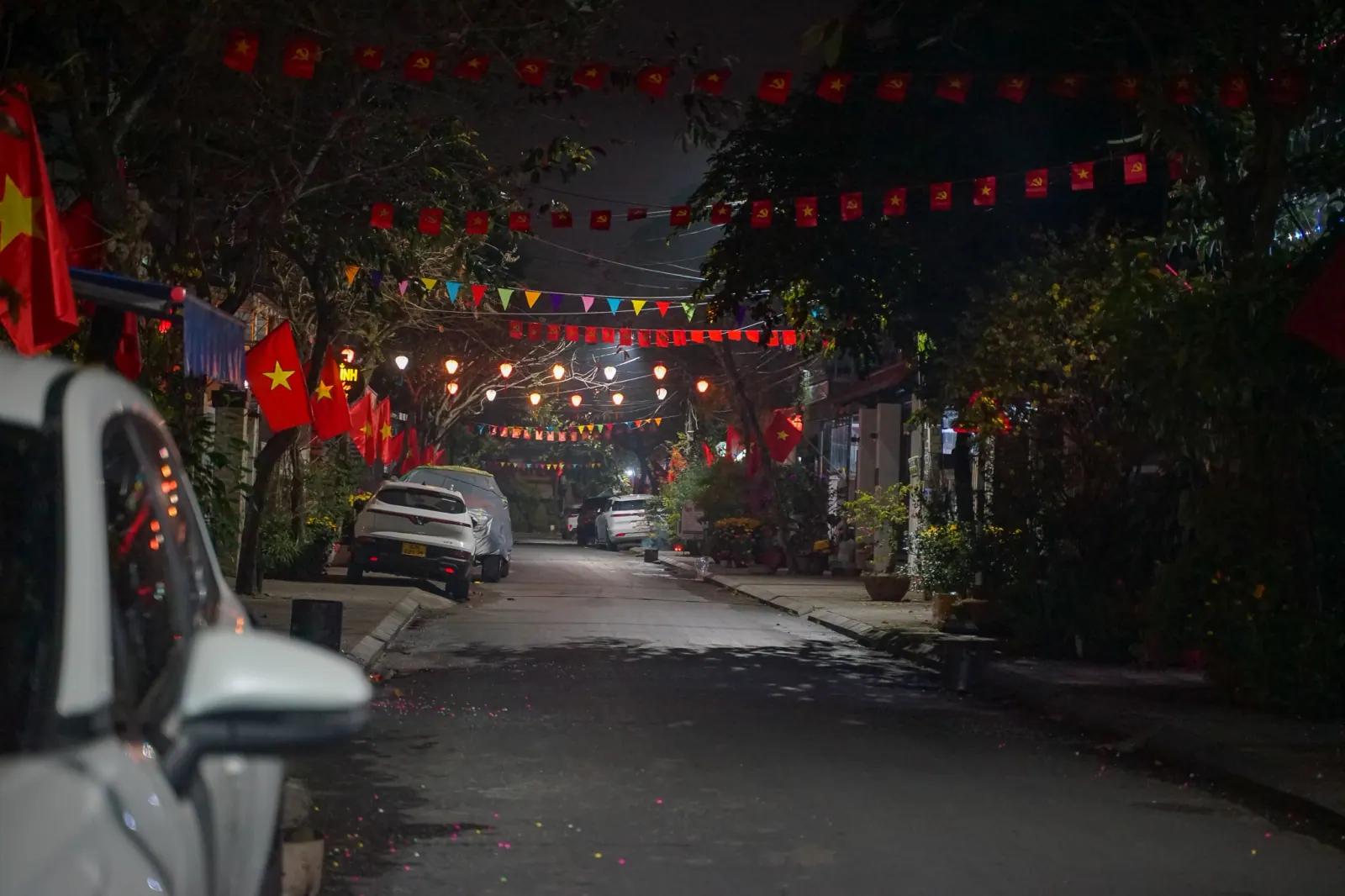
You’ll also see households leave the street in a slightly different state than before midnight—little traces of color, ash, and offerings. It looks messy to some people. To locals, it looks like a ritual completed.
Safety note: if you’re photographing this, keep distance. Burning pots are hot. Streets are crowded. Don’t step into ash piles.
4) Fireworks at 12:00
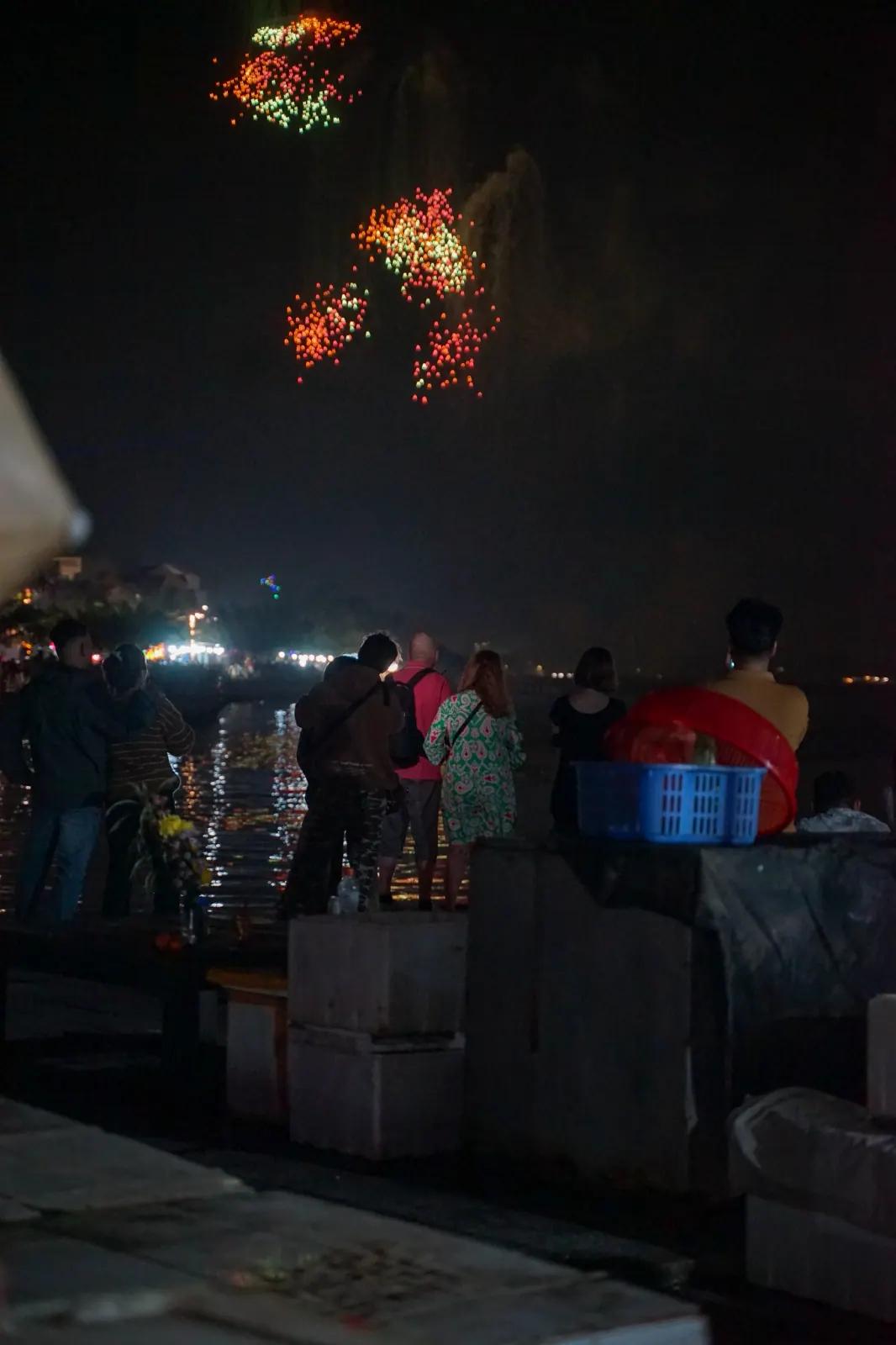
At exactly midnight, the town shifts from ritual to celebration. People stop walking. Heads tilt up. Phones appear. You’ll hear the first “Happy New Year!” in multiple languages.
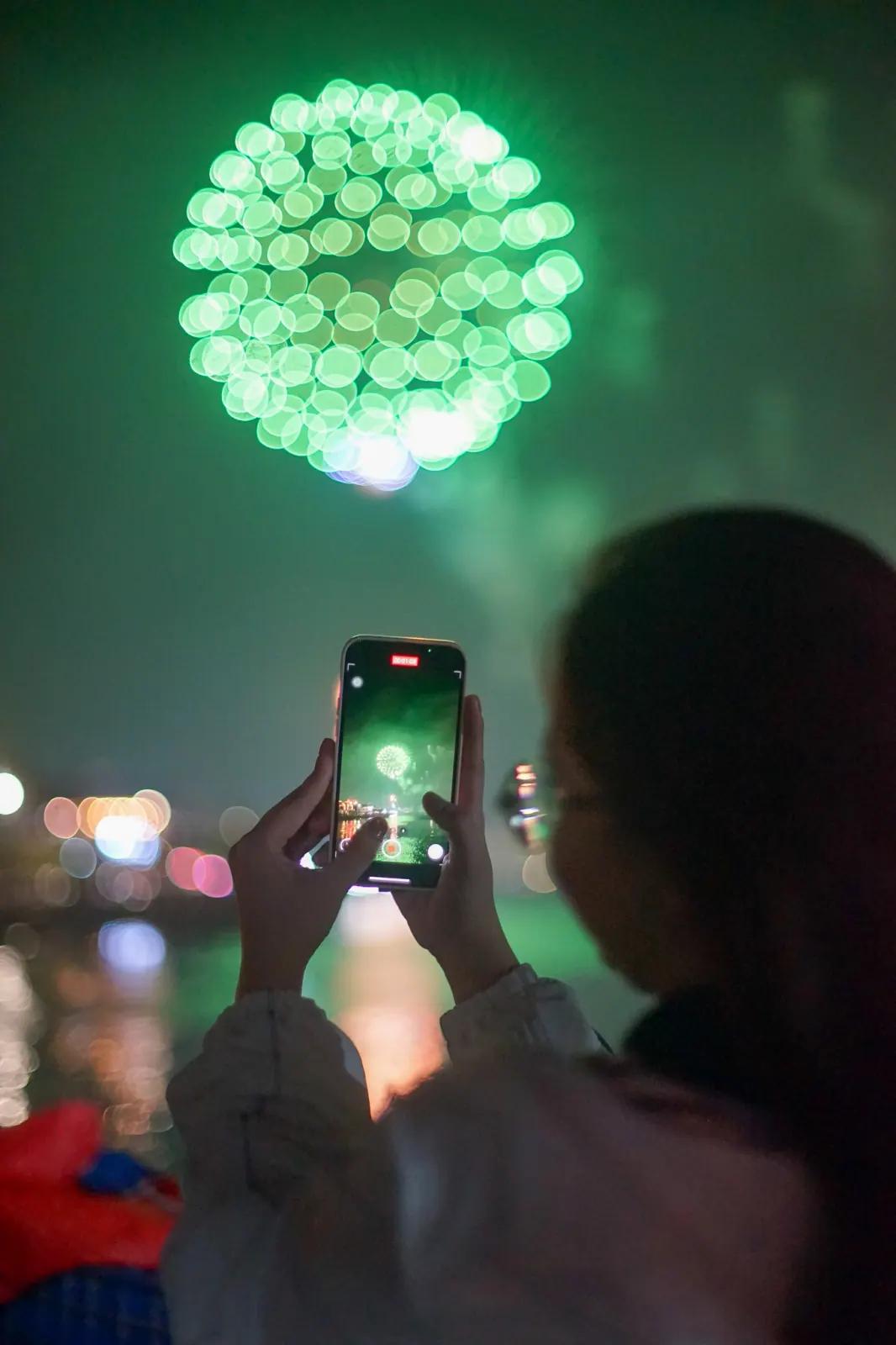
In my photos, you’ll see what it looks like in the crowd: bright light against the river-dark sky, and that very specific feeling of everyone sharing the same 10 seconds.
This is also when greetings begin. In Vietnamese you’ll hear “Chúc mừng năm mới”—it simply means Happy New Year. I’ll stick with Happy New Year from here.
5) Temple visit for fortune sticks and small blessings
After midnight, Hoi An becomes a moving line.
Many locals head to “Chùa Ông”—commonly called the Quan Cong Temple (a Chinese-style temple in Hoi An associated with the revered general Guan Yu / Quan Công). After this, I’ll call it Quan Cong Temple. It stands opposite the market, a few doors from the Phuc Kien Assembly Hall, which keeps its own set of New Year customs.
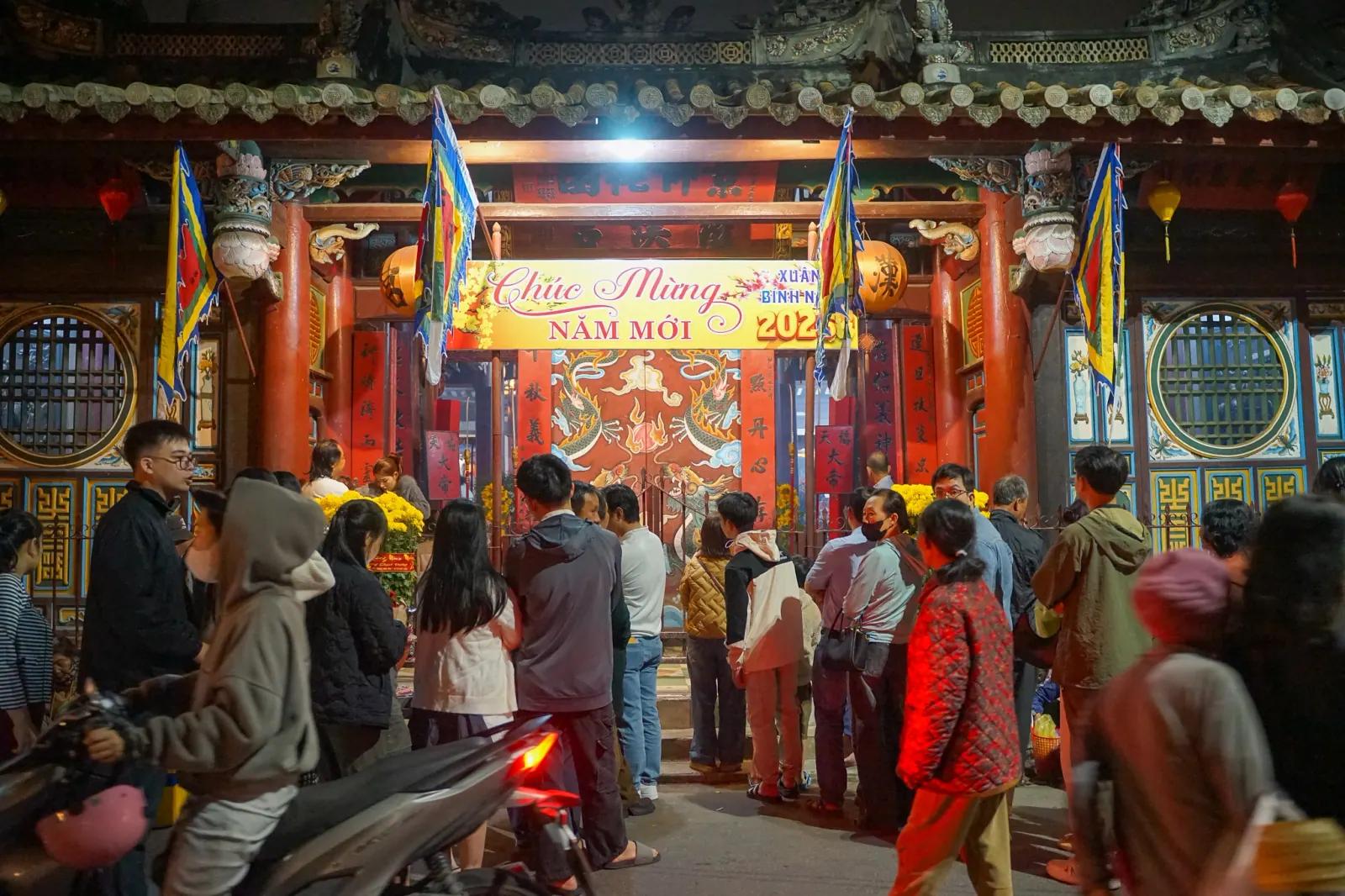
What people do there
- light incense
- pray for luck in business, health, and family peace
- ask for a first fortune of the year (often via fortune sticks)
Fortune sticks are a common practice in Chinese-influenced temples across Asia: you shake a container until one numbered stick falls out, then match it to a written fortune. It’s not “fixed destiny.” Locals often treat it as guidance—something to think about, not something to fear.
The three lucky items to collect
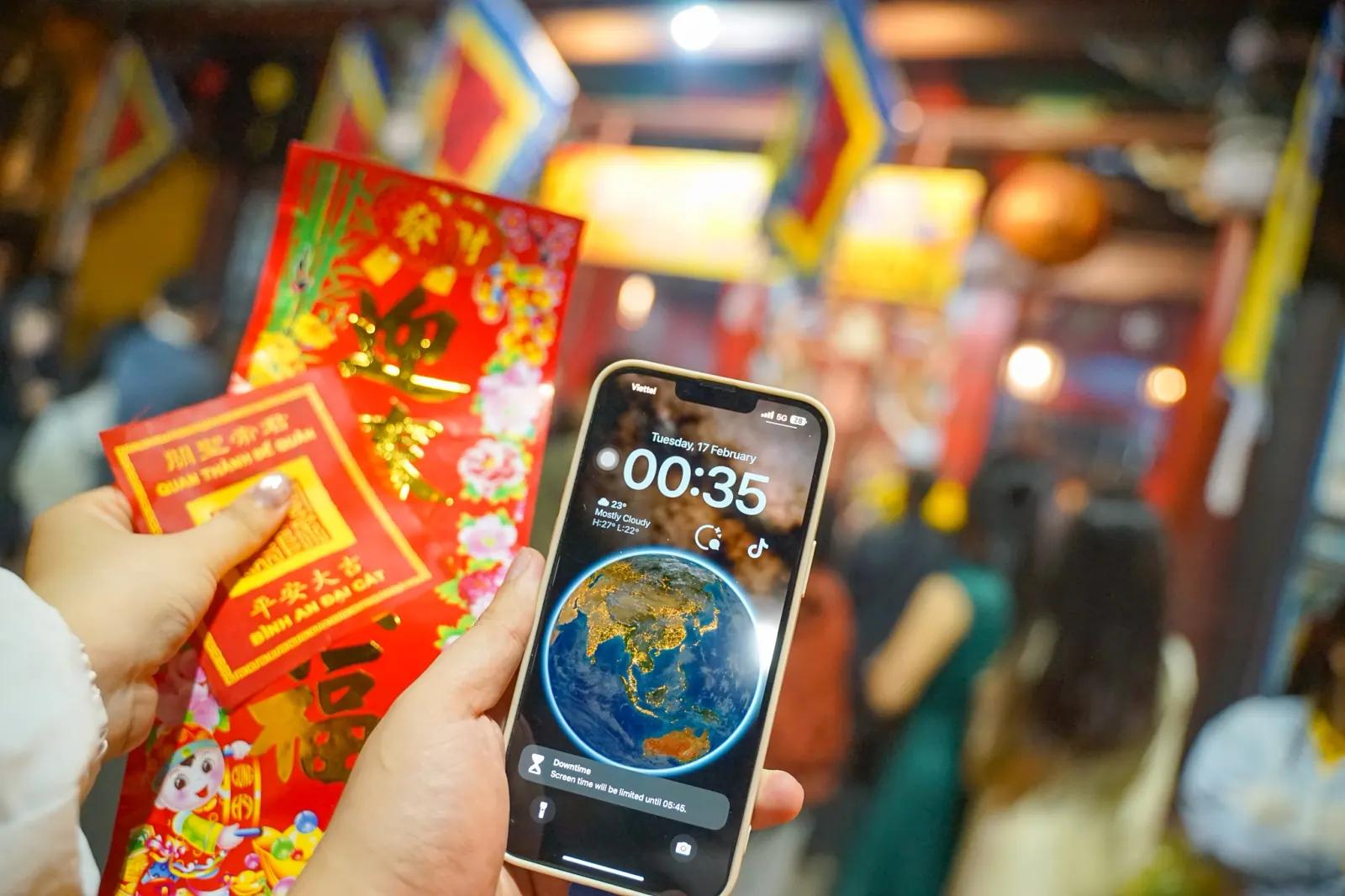
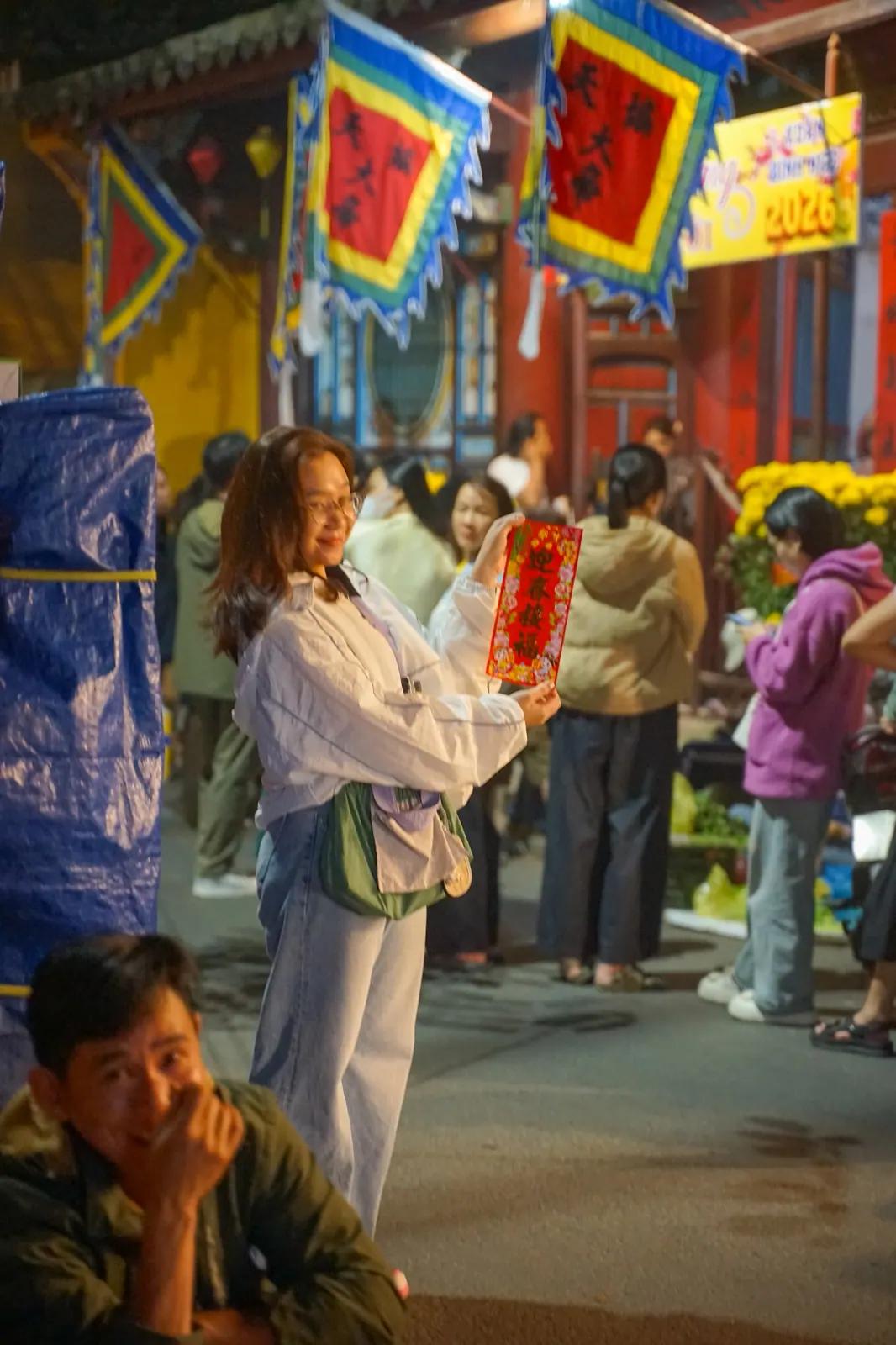
In my photos you can see the three items many people take home:
- a small pouch of rice
- a paper charm / amulet
- a fortune sheet (the written result)
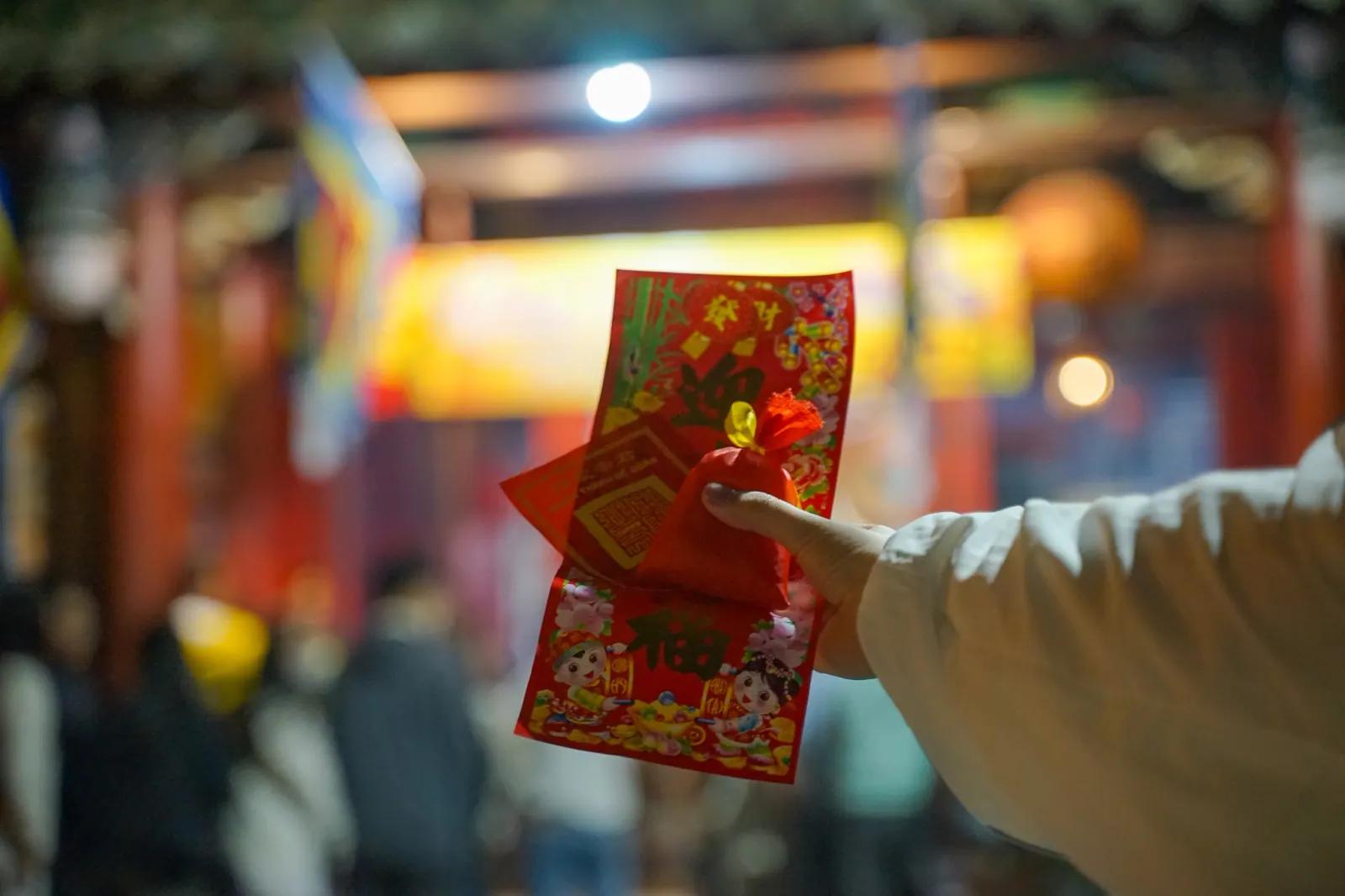
Meanings vary, but the most common interpretation is:
- rice pouch: abundance and “never running out” (a practical symbol in a rice culture)
- paper charm: protection—something you keep at home as a reminder of blessing
- fortune sheet: advice for the year (some people tape it up at home, others keep it in a wallet)
6) First-footing at home
“xông đất” is the Vietnamese tradition of first-footing—the first person to enter a home after the Lunar New Year begins.
Many families believe the first visitor sets the “tone” of the year. So they might:
- choose someone with “good energy,” stable work, kind personality
- avoid conflict or negative talk in the first minutes
- keep the first visit short, warm, and simple
If you’re invited into someone’s home right after midnight, understand the weight of that invitation. Even if the family is relaxed about it, the tradition still exists in the background like a quiet rule.
As a local, I like the human side of first-footing: it’s a ritual that forces people to start the year with politeness. It’s not magic. It’s social engineering—in the most beautiful way.
7) The lucky money journey begins
Finally: “lì xì.” I’ll define it once: lucky money—cash gifted in a red envelope, especially for children (and often elders too), as a symbol of luck and protection.
For visitors, the important part is not the amount. The important part is:
- the color red (luck)
- the gesture (care)
- the timing (early days of the year)
Lucky money season stretches beyond midnight into many days of visiting. People travel across town to greet relatives. Kids collect envelopes like tiny accountants. Adults pretend they’re not tired.
And under it all is the real reason: Tet is the rare time when almost everyone makes an effort to show up.
Traveler etiquette in one minute
If you want to experience Tet night respectfully in Hoi An:
- Don’t block altars (home or business) for photos
- Ask before photographing faces, especially during prayers
- Dress modestly for temples (covered shoulders is a safe default)
- Don’t touch offerings or ritual objects
- Be patient in crowds—temple lines move slowly for a reason
- Use quiet body language near incense and prayer areas
None of this needs a guide. But if you would rather have someone read the street for you — which altar is private, which temple queue is worth joining — that is most of what a private walking tour of the Ancient Town is for.
Closing: my New Year wish
When I wrote this, I had just finished a long stretch of work I carried for years. Tet always hits differently when you’re at the end of something—when you finally have space to look back.
So here’s my plain wish for you:
May your new year be calm. May your work be steady. May your home feel safe. And if you’re far from where you grew up, may you find a small place that feels like returning.
Happy New Year.
— Tom
Frequently asked questions
When is Tet?+
Tet follows the lunar calendar, so the date moves each year. In 2026 Lunar New Year's Day fell on 17 February; it falls on 6 February 2027 and on 26 January 2028. The public holiday runs for several days around it.
What happens at midnight on Lunar New Year's Eve in Hoi An?+
Families and businesses finish the midnight offering tray between about 10:30 and 11:30 PM, then light incense and pray. At midnight there are fireworks and the first greetings, joss paper is burned outside soon after, and from around 12:30 AM the temple queues build in the Ancient Town.
Can visitors watch the Tet rituals?+
Yes, from a respectful distance. Do not block an altar at a home or a business, ask before photographing faces during prayers, keep away from the burning pots, and never touch offerings or ritual objects. Covered shoulders are a safe default at temples.
Which temple do locals visit after midnight in Hoi An?+
Many head to Quan Cong Temple, known locally as Chua Ong, opposite the market and a few doors from the Phuc Kien Assembly Hall. People light incense, pray for luck in business, health and family, and ask for a first fortune of the year with fortune sticks. Many take home a small pouch of rice, a paper charm and the written fortune.
What is xong dat, the first-footing tradition?+
Xong dat is the tradition of the first person to enter a home after the new year begins. Many families believe that visitor sets the tone of the year, so they choose someone with good energy, keep the visit short and warm, and avoid conflict in the first minutes.
What is li xi, the lucky money?+
Li xi is cash given in a red envelope, mostly to children and often to elders, as a symbol of luck and protection. The amount matters far less than the red colour, the gesture and giving it in the early days of the year.