
Travel guide
Fujian Assembly Hall in Hoi An: History, Beliefs and Community

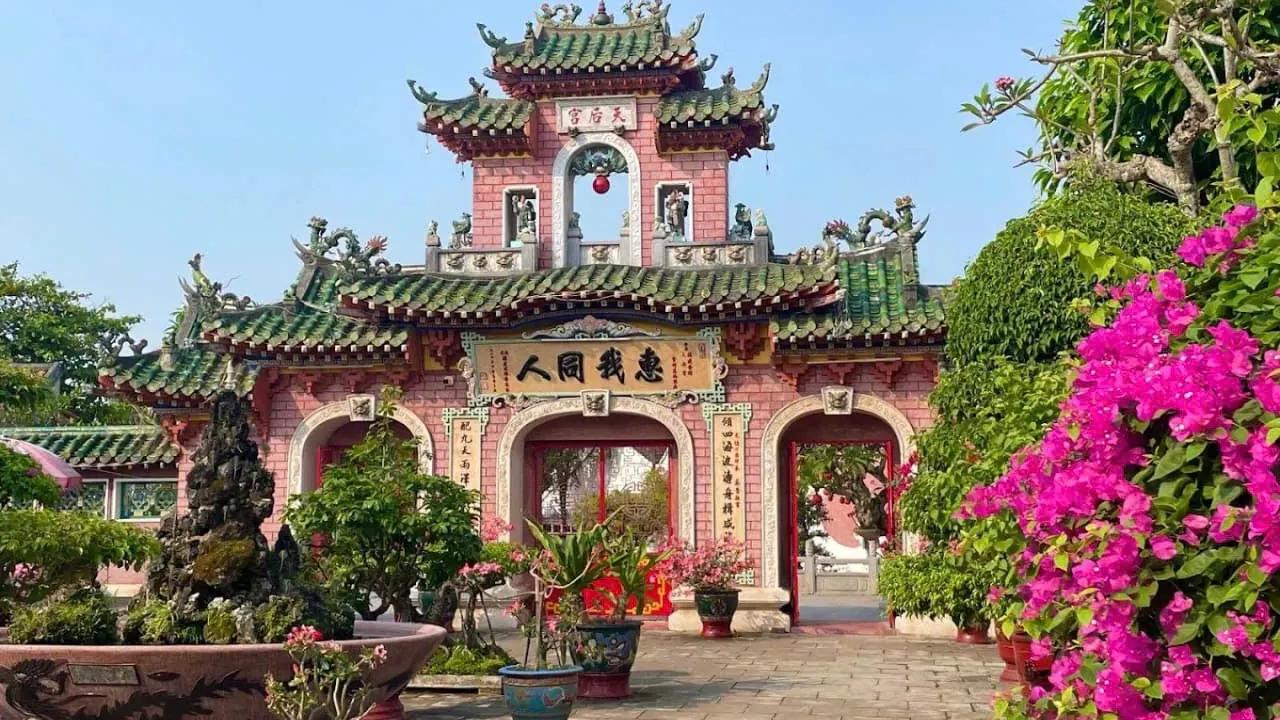
Fujian Assembly Hall is one of Hoi An's most visually impressive heritage buildings, but its deeper story is about community, migration and the sea. An earlier religious site, the later involvement of prosperous Chinese merchants, devotion to Thien Hau or the Holy Mother, hanging incense, a model sailing boat, courtyards and a rear sanctuary with several different forms of worship all sit within one compound. These details make the hall a strong example of how merchant communities connected religion with the practical dangers and hopes of maritime life.
From Earlier Religious Site to Assembly Hall
Local accounts describe the monument as formerly known as Kim Son Pagoda, used by Vietnamese people for Buddhist worship. The site was later rebuilt by prosperous Chinese merchants and became an assembly hall.
This sequence comes from community tradition rather than a single documented record, so it is worth treating the exact chronology as a traditional account.
The Migration and Sea-Protection Story
Tradition tells of people connected with Fujian leaving by boat for Southeast Asia while carrying a wooden image of the Holy Mother. They believed she protected them from danger at sea and helped them arrive safely in Hoi An.
This is best understood as a community narrative. Its meaning is clear even without treating every detail as independently verified: maritime travel created strong demand for spiritual protection.
The Main Hall
The assembly hall divides into front, middle and back areas. Thien Hau, the Holy Mother, sits in the main hall, with Thien Ly Nhan on one side and Thuan Phong Nhi on the other.
In local tradition, these figures assist the Holy Mother in finding and saving people in danger at sea.
Hanging Incense and Family Wishes
Large burning incense coils hang from the ceiling, with the names of families or companies attached. People hope for happiness and longevity.
This practice turns the ceiling into a visible record of contemporary devotion and shows that the site continues to function spiritually rather than only as historic decoration.
The Model Sailing Boat
On the right side of the main hall stands a model sailing boat attributed to an artisan from Kim Bong woodcarving village. More than one explanation exists for the boat: a connection with Fujian migration, or a private merchant's sea rescue story.
Keeping both versions is useful because it distinguishes living tradition from one single fixed historical explanation.
Courtyard and Chinese Architectural Logic
A courtyard connects the main hall and the rear sanctuary. This is a traditional Chinese architectural solution that brings sunlight into buildings where windows may be limited.
That makes the hall useful not only for religious interpretation but also for architectural comparison with Hoi An's merchant houses.
Rear Sanctuary and Different Forms of Worship
The rear sanctuary holds several areas: goddesses and midwives connected with fertility and childbirth, six Ming generals, and the God of Wealth.
These different forms of worship show that the assembly hall served many community concerns: safety, family continuity, memory, prosperity and business.
A Local and Family Connection
Tommy's connection with Fujian Assembly Hall is also personal, because he and his grandfather participated in conservation-related activities involving this hall and the Cantonese Assembly Hall.
That memory matters because it shows the building is part of living local heritage, not only a visitor attraction.
Reading Belief Without Oversimplifying It
The hall holds stories about migration, sea rescue, fertility, wealth and protective deities. These stories should not be reduced to simple labels such as 'luck' or 'superstition.' They reflect real concerns faced by merchant families: dangerous travel, economic uncertainty, family continuity and the desire for safety.
Understanding what these beliefs meant in context is more useful than judging them. It also helps to be clear when a story belongs to tradition rather than verified documentary history. That approach respects both the spiritual meaning of the hall and the visitor's need for accurate information.
What to Look for from the Front to the Back
A useful way to understand Fujian Assembly Hall is to move through it as a sequence rather than treating the site as one decorated courtyard. Begin with the entrance and notice how the architecture announces a community institution. Continue toward the main hall and identify the central objects of worship. Look upward at the hanging incense and consider how present-day wishes become part of the visual environment.
Then move toward the courtyard and rear sanctuary. The transition between spaces helps explain how architecture organizes different forms of worship and community concern. By the time visitors reach the back, they have moved from a broad public entrance into more specialized religious spaces.
Final Thoughts
Fujian Assembly Hall brings together many of the themes that define Hoi An: migration, international trade, belief, architecture, craftsmanship and community organization. Visitors who move beyond the ornate gate and ask what each space was used for will understand much more about the people who created and maintained the hall.
Visit Fujian Assembly Hall with the story behind the architecture and understand how maritime belief, merchant community and family wishes shaped one of Hoi An's most important cultural spaces.
Frequently asked questions
What is Fujian Assembly Hall in Hoi An?+
It is a historic assembly hall associated with the Fujian merchant community, religious worship and community life.
Who is worshipped in the main hall?+
Thien Hau, the Holy Mother, together with Thien Ly Nhan and Thuan Phong Nhi, figures associated with seeing and hearing across great distances.
Why is the sea important to the hall's story?+
The community narrative connects the Fujian people with migration by boat and belief in spiritual protection from maritime danger.
What are the hanging incense coils for?+
Families and companies attach their names along with wishes for happiness and longevity.
Why is there a sailing boat model?+
More than one traditional explanation exists, including a link with Fujian migration and a private merchant's sea-rescue story.
What else is worshipped in the rear sanctuary?+
Fertility-related goddesses and midwives, six Ming generals and the God of Wealth.