
Travel guide
Japanese Covered Bridge in Hoi An: More Than a Famous Landmark

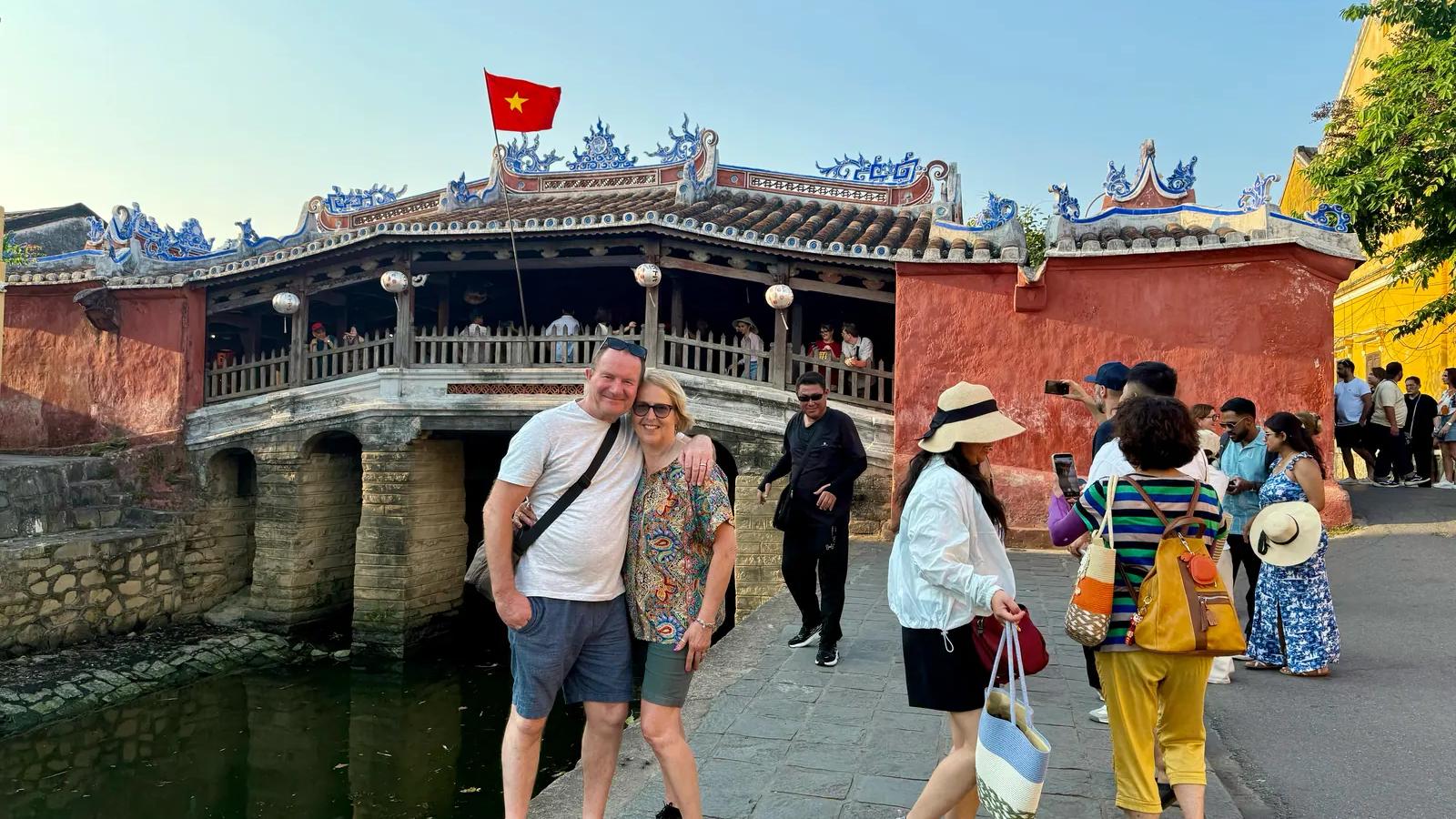
The Japanese Covered Bridge is one of the most recognizable structures in Hoi An. Its scale is modest, but the stories surrounding it connect trade, migration, religion and local legend. The bridge is a symbol of the Ancient Town and sits in the historic area between Nguyen Thi Minh Khai and Tran Phu streets. To understand it well, visitors should separate the physical monument from the traditional stories that generations have attached to it.
A Bridge in a Multicultural Trading Town
The bridge is associated with the period when Japanese merchants were active in Hoi An. This fits the larger picture of the town as an international commercial center where different communities lived and traded near one another.
The bridge therefore belongs to the commercial story of Hoi An, not only to sightseeing.
The Aquatic Monster Legend
One well-known local legend describes an aquatic monster whose head was in India, body in Vietnam and tail in Japan. Its movement was believed to cause floods, storms and earthquakes. The story says the bridge was built to control the creature and bring peace.
This is legend rather than verified history. Its cultural value lies in showing how communities connected architecture with ideas of protection and natural danger.
Monkey and Dog Statues
There are two traditional explanations for the monkey and dog figures. One account says construction began in a Year of the Monkey and finished in a Year of the Dog. Another says these animals were sacred in Japan.
Rather than forcing one explanation as the only truth, both are worth presenting as traditional interpretations.
Lai Vien Kieu
In 1718, Lord Nguyen Phuc Chu visited the monument and gave it the three Chinese characters Lai Vien Kieu. The name is traditionally interpreted as a bridge built by foreigners.
That name reinforces the idea of the bridge as part of a town shaped by people arriving from elsewhere.
The Pagoda and Bac De Tran Vu
A later pagoda space was added on the bridge, dedicated to Bac De Tran Vu, who is connected in local tradition with weather and the power to control the monster. This adds another cultural layer to the structure.
The bridge is therefore not just an engineering object. In local tradition, it carries practical, spiritual and symbolic meaning at the same time.
The Bridge as a Modern Symbol
The bridge became the symbol of Hoi An Ancient Town, and its image appears on the 20,000 VND banknote.
For visitors, this makes the bridge immediately recognizable. But the deeper experience comes from understanding why a relatively small structure can represent the multicultural history of an entire town.
A Local Perspective
Tommy's strongest connection to the bridge is not only historical. Early-morning memories of coffee near Chua Cau around sunrise capture another side of the place: quiet streets, soft light and a slower local rhythm before tourism becomes busy.
That contrast matters, because it moves the bridge from a famous landmark into lived local experience.
How to Tell the Bridge Story Responsibly
The bridge is a good example of why heritage interpretation needs to separate evidence from legend. There are precise dates, symbolic explanations and a dramatic aquatic-monster story attached to the same small structure. All of them can be preserved without presenting every detail as proven fact.
A useful habit is to say 'according to a local legend' or 'the traditional account says'. This keeps the story alive while being transparent about its nature. It also gives visitors permission to appreciate folklore as culture. Legends reveal what communities feared, valued or hoped for, even when they are not documentary history. In this way, the Japanese Covered Bridge can be understood as architecture, symbol, religious space and storytelling tradition at the same time.
What to Notice When You Stand at the Bridge
When visiting the bridge, look first at its scale. It is not a monumental structure designed to dominate the town. It sits within the narrow historic streets and works at pedestrian scale. That relationship helps explain why it feels integrated into the Ancient Town rather than separate from it. Notice the roof, the enclosed character of the crossing and the transition between the streets on each side.
Then look for the details connected with the traditional stories: the monkey and dog figures, the religious space and the raised threshold at the entrance. These details are useful starting points for interpretation, but they should be explained carefully. Some are supported by the physical monument; others belong to layers of local storytelling that developed around it.
Final Thoughts
The Japanese Covered Bridge is most meaningful when visitors see both its physical form and the layers of story around it. History connects it with international trade. Legend connects it with protection. Religion adds spiritual meaning. Local memory adds atmosphere. Together, these layers explain why the bridge remains one of Hoi An's strongest symbols.
Visit the Japanese Covered Bridge as more than a photo stop. Discover the trade, beliefs, legends and local memories behind Hoi An's most recognizable symbol.
Frequently asked questions
Why is it called the Japanese Covered Bridge?+
The bridge is associated with the Japanese merchant presence in old Hoi An.
What is Lai Vien Kieu?+
Lord Nguyen Phuc Chu gave the bridge this name in 1718, and it is traditionally explained as meaning a bridge built by foreigners.
Why are there monkey and dog statues?+
Two traditional explanations exist: construction years connected with the zodiac animals, or the sacred status of these animals in Japanese tradition.
Is the aquatic monster story a historical fact?+
No. It is a local legend, and it should be enjoyed as a traditional account rather than documented history.
Why is the bridge important today?+
It has become a symbol of Hoi An and represents the town's multicultural commercial past. Its image also appears on the 20,000 VND banknote.
When is a good time to experience the bridge quietly?+
An early-morning visit can show a calmer atmosphere before the busiest visitor period.