
Travel guide
Hoi An History and Architecture Through Tommy's Eyes

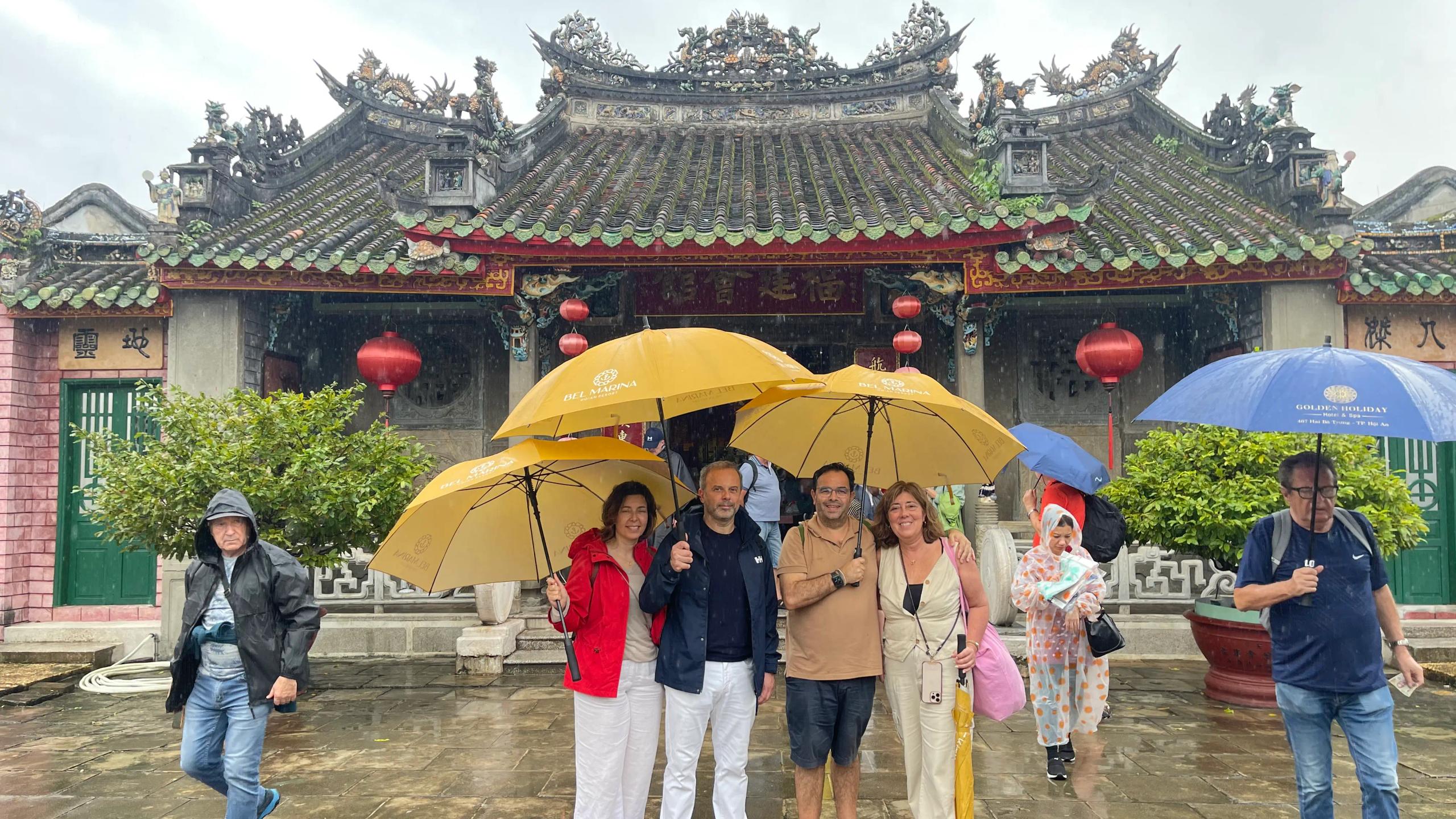
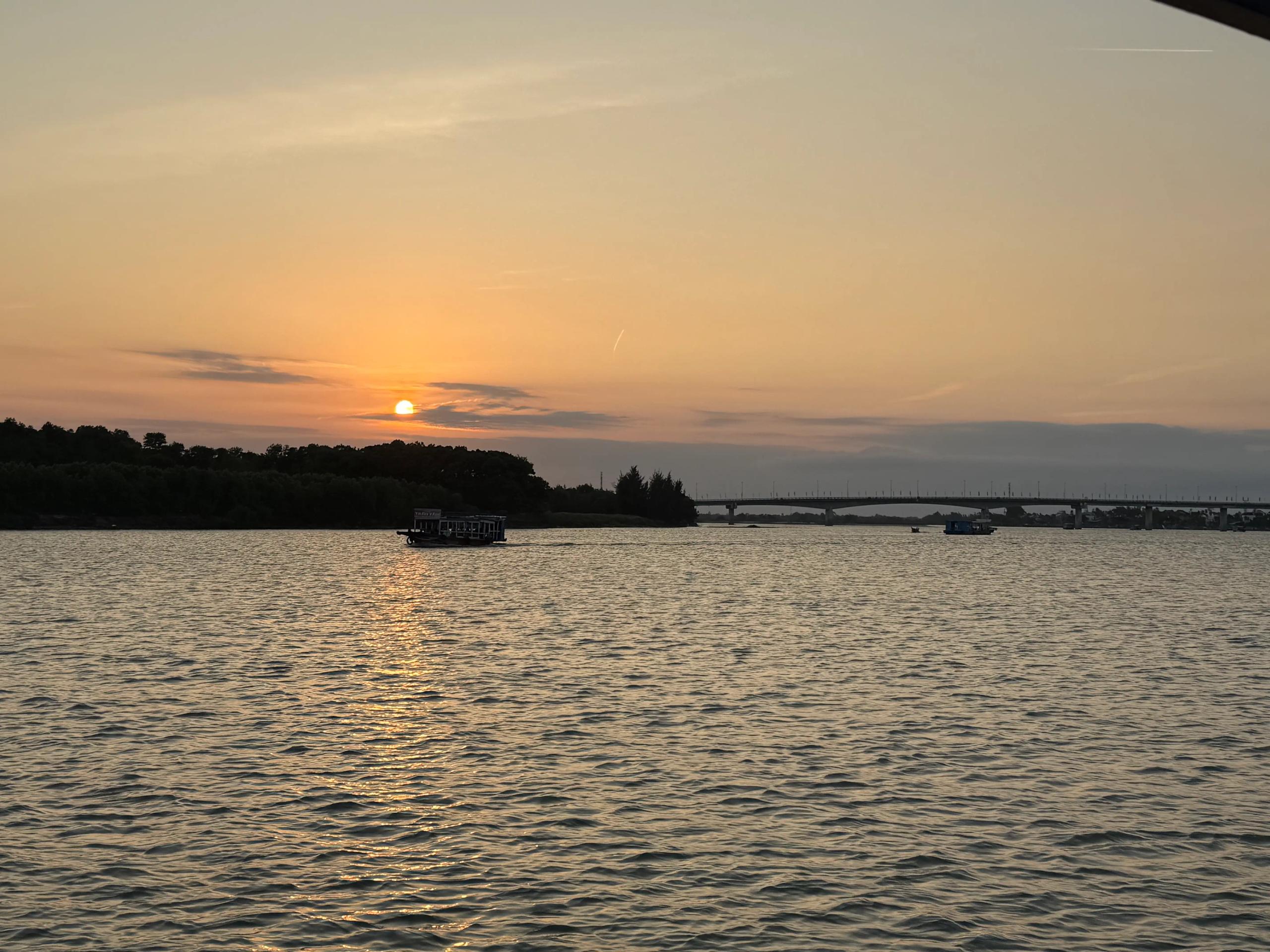
I was born and raised in Hoi An. My memories of this place include morning coffee near the Japanese Covered Bridge, Bach Dang Street beside the river, and ferry crossings to Cam Kim, where my family has its roots. These are places I associate with belonging, as well as places through which visitors can begin to understand the region.
When I look into the history of Quang Nam, I keep returning to the relationship between the town and its surrounding countryside. Rivers connected areas of production with markets. Markets brought goods to trading vessels. Encounters between people, repeated over generations, left their marks on the culture of Hoi An.
This article follows those connections, bringing together historical reading and the perspective of someone who grew up here. The focus is the late sixteenth and seventeenth centuries, when the Nguyen lords strengthened their position in the region and Hoi An developed as a major trading port. Alongside that history, I share the memories that shape how I see the town today.
Here, Quang Nam means a historical and cultural region. Its administrative boundaries and official names changed over time. Understanding those changes helps us avoid reading the entire past through the geography of a single period.
Quang Nam before the trading port
The history of the Hoi An area reaches much further back than the Nguyen lords. Archaeological research presented by Hoi An's heritage conservation authority identifies layers associated with Sa Huynh culture and Champa. These provide an essential background to the later port town. [2]
For me, that longer history changes the starting point of the story. We need to make room for people who lived in this landscape before the familiar streets took shape. The region was already inhabited, used and understood by earlier communities. Its rivers and coastal connections acquired different meanings as political circumstances and settlement patterns changed.
The establishment of Quang Nam as a thua tuyen, an administrative division under King Le Thanh Tong in 1471, is an important historical marker. It belongs to the history of territorial administration, while the everyday history of the region also involves settlement, cultivation and exchange. [2]
Both perspectives matter. Political events help explain changes in authority. The lives of residents help us understand how a region was inhabited and sustained. A visitor who keeps both in mind can move beyond a list of rulers and dates towards a more complete picture of place.
Why historical place names matter
A familiar name can create the impression that it has always described the same territory. Reading about Quang Nam requires a little more care. We need to ask which period a writer is discussing and what kind of geographical or administrative unit the name describes.
The Vietnamese word xu can evoke a broader region or cultural homeland. Terms such as tran, dinh and tinh refer to forms of administration that need to be understood in their historical settings. Translating all of them simply as "province" can conceal meaningful differences.
This matters when we discuss Hoi An. An event in the time of Nguyen Hoang belongs within the wider circumstances of Thuan Hoa and Quang Nam. A building added to the town in a later century needs to be explained through the circumstances of that later period.
I find two questions particularly helpful when telling the story: where are we standing, and which moment are we looking back towards? Once those are clear, dates become easier to follow. They describe changes in a place rather than becoming isolated facts to memorise.
Nguyen Hoang and the establishment of the Quang Nam headquarters
In 700 Years of Thuan Hoa, Phu Xuan and Hue, historian Nguyen Dac Xuan records that Nguyen Hoang was entrusted with responsibility for both Thuan Hoa and Quang Nam in 1570. Quang Nam then included the prefectures of Thang Hoa, Tu Nghia and Hoai Nhan. [1]
This was a broad historical territory. It should not be imagined solely through the extent of a modern destination bearing the same name. The administrative account helps explain the scale of the region involved in the Nguyen family's developing southern base.
A further important step came in 1602. Nguyen Hoang established the Quang Nam headquarters, arranged stores of provisions and entrusted his sixth son, Nguyen Phuc Nguyen, with its administration. Nguyen Dac Xuan connects this period with the development of Hoi An as an important port town. [1]
The history of these headquarters is associated with Thanh Chiem, also remembered through the name Dinh Chiem. Accounts differ in how they describe the earliest location and the movement of the administrative seat. Those differences deserve attention rather than being compressed into an overly simple claim about one unchanged site.
What matters for the wider story is the relationship between administration and commerce. Decisions about the management of the region affected the conditions in which traders and residents worked. The port's development belongs within that political and economic setting. [3]
How the administrative centre and port supported each other
Why would a merchant choose to return to the same harbour? A useful location would be part of the answer. So would access to goods, reliable contacts and a trading environment in which arrangements could be made with some confidence.
That question helps me explain why the administrative centre belongs in the story of Hoi An. The management of merchants and taxation influenced the practical conditions of trade. Decisions made away from the waterfront could affect business at the landing places, while commercial activity contributed to the resources of the wider region.
This is an interpretation of the relationship between government and commerce. It does not imply that policies remained identical throughout the Nguyen period, or that every encounter between officials and merchants followed the same pattern.
A historical administrative site may retain fewer immediately visible traces than an old commercial street. Its importance can therefore be harder to appreciate during a short visit. Written evidence helps connect what survives with institutions and activities that no longer have an obvious physical presence.
Placing Thanh Chiem and Hoi An within the same account gives visitors a fuller picture. One opens questions about government and organisation. The other opens questions about exchange, residence and movement. Together they help explain the conditions behind the region's development.
The regional economy behind Hoi An
Thinking of Hoi An as a port serving a wider region helps explain why Quang Nam belongs at the centre of its history. The town brought together flows of goods, people and authority that originated in different places. Its success depended on connections that extended well beyond the streets visitors walk today.
Research on the Thu Bon exchange network discusses forest products, silk production and the movement of goods between upland areas, the lowlands and the coast. It also describes the distribution of imports inland. This was a two-way relationship: the region supplied commerce, while the port provided access to outside markets and goods. [6]
A useful example is a hypothetical consignment moving towards the port. Someone produces or gathers it, someone collects it, and others arrange transport, storage and sale. None of these stages should automatically be assigned to one particular village without evidence. The example simply makes visible the cooperation behind a finished transaction.
This perspective also gives ordinary livelihoods a place in the historical account. Feeding residents and visitors, maintaining boats and buildings, and moving products between markets are part of what makes an urban economy possible. Commercial wealth at the waterfront is therefore an outcome of work distributed across the region.
A port system larger than the old town
The surviving old streets are one part of the historical port landscape. A study published by Hoi An's heritage authority describes a broader system involving offshore landmarks, sea entrances, anchorages, river markets, the administrative headquarters and the commercial town. It identifies places such as Cu Lao Cham, Tra Nhieu and Trung Phuong within that wider account. [7]
Each location had a different role. An anchorage was not the same as a market, and a market was not the administrative centre. A vessel, a shipment and a merchant could depend on several of these places during the same trading journey.
For visitors, this changes the geographical scale of the story. Looking out towards the sea, moving along the river and exploring the hinterland are ways to ask how different activities connected. The old town becomes more intelligible when it is placed within that larger working landscape.
The same approach explains why a countryside experience can belong within a heritage journey. It provides an opportunity to understand production and livelihoods, provided that present-day activities are clearly distinguished from claims about the historical port.
Approaching seventeenth century Hoi An from the water
To imagine the old port, I prefer to begin on the river. A visitor arriving by sea encountered a network of waterways, landing places, settlement areas and points of exchange. Goods moved between boats and the shore, then continued towards buyers, storage areas or inland destinations.
Picture a boat approaching a busy landing place. People are moving goods, smaller craft are passing, and conversations require negotiation or interpretation. Someone newly arrived needs accommodation, commercial contacts and information about the next stage of the journey.
This is a historically informed reconstruction, not a quotation from an eyewitness or a description of one documented morning. Its purpose is to draw attention to the practical life of a port rather than to suggest that every detail can be recovered.
Research on the distribution of archaeological sites places commercial activity across several locations in the Thu Bon river area. Historical accounts discussed in that research also describe Chinese and Japanese traders and trading gatherings lasting for months. [4]
Waiting was therefore part of maritime life. Travellers needed suitable conditions for the next voyage. Time spent ashore created opportunities to establish relationships, learn about local goods and return to familiar partners on a later visit.
One waterfront seen from three perspectives
Imagine that same waterfront from the position of a visiting merchant. The immediate questions are practical. Has the cargo arrived safely? Who will receive it? How long will the transaction take? A place becomes easier to navigate when someone can introduce trustworthy contacts and explain unfamiliar arrangements.
Now consider the person moving the goods. From this position, the port is understood through distance, weight and labour. A cargo has to travel between a boat, a landing place and its next destination. The apparent success of a trading voyage depends on many smaller tasks carried out by people whose names may never enter the written record.
Finally, imagine a household living close to the waterfront. Arrivals may create demand for food, accommodation and services. They can also bring disruption and uncertainty. A commercial town has to accommodate visitors while remaining a place where long-term residents conduct their own lives.
These three viewpoints are an interpretive exercise, rather than biographies of identifiable individuals. They remind us that a port town cannot be understood only through successful merchants or impressive vessels. It also depended on the work, patience and household responsibilities of many other people.
From trade to trust between communities
Cultural exchange is often explained through architecture or religious buildings. I also like to consider something less visible: trust. Buying and selling at a distance required people to find ways of communicating, agreeing terms and maintaining contact beyond an initial meeting.
Repeated exchange could create a need for intermediaries, practical language skills and familiarity with different customs. These are useful ways to think about how a port became a setting for sustained encounters between people.
Such contact should not be turned into a claim that every relationship was easy or that differences disappeared. Communities have their own histories. Their circumstances and roles change over time, and a broad phrase such as "international port" can hide those changes if it is left unexplained.
In telling the story of Hoi An, I want to retain that human complexity. A building can show the presence of a community, but the lives behind it involve cooperation, adaptation and individual choices. That is where the history becomes more meaningful to me.
The Thu Bon River and the people behind prosperity
A trading port needs goods and the people who bring them to market. Behind the activity of Hoi An lay a wider world of production and transport: cultivators, craftspeople, collectors, boat operators and households supplying food and everyday necessities.
This economic relationship is a useful way to read the landscape. The waterfront shows one stage in the journey of a product. To understand the work behind it, we need to look further inland and towards the settlements connected with the town.
The same approach changes the questions we ask about prosperity. Who produced the goods? Who carried them? Who provided for the people who gathered around the market? A successful port depended on work distributed across a much larger area than its most visible streets.
My family's roots in Cam Kim give this connection a personal meaning. When I think about the countryside across the water, I think about the relationship between the town where I grew up and the place to which my family belongs. That relationship offers a starting point for exploring the wider region.
Looking back towards Hoi An from Cam Kim
Ferry crossings to Cam Kim are part of the memory through which I see Hoi An from both sides of the river. From the town, attention easily settles on architecture, shops and well-known landmarks. Thinking about family roots leads me towards the connections between home, work and belonging.
For a visitor, a river may first appear as scenery. For someone with family ties across it, the same water can be associated with movement and return. That difference is one reason local memories can add something that a visitor map cannot fully convey.
A point on a map may also be a place where a family has lived and worked over generations. Listening to residents can reveal associations that are not apparent from the appearance of a building or a stretch of riverbank.
I do not suggest that my family's experience represents all of Quang Nam. Every village and household has its own history. A personal memory can, however, lead into wider questions about settlement, work and changing connections between places.
That is the spirit in which I want to talk about Cam Kim: by making room for people who live there to describe their own surroundings and the meanings they attach to them.
Reading the cultural layers of Hoi An
UNESCO describes Hoi An as an exceptionally well-preserved example of an Asian trading port, reflecting a combination of local and foreign influences. That recognition provides a useful framework, but individual places still need to be understood through their own histories. [5]
The presence of Vietnamese, Chinese and Japanese influences does not mean that every building standing today survives unchanged from the seventeenth century. Houses and places of worship have been constructed, repaired and altered over time. The town contains multiple historical layers.
I accompanied my grandfather in conservation work at the Cantonese and Fujian Assembly Halls. That memory helps explain my interest in details that a passing visitor might overlook: a structural element, an old surface or a part of a building that needs care.
For me, conservation therefore has a human dimension. It involves people carrying out work and passing on concern for a place. Understanding a monument means asking how it has changed and how communities continue to relate to it.
Personal experience and historical evidence have different roles here. My memories explain my attachment to these buildings. The dates and histories of particular features still require their own documentary evidence.
How Vietnamese, Japanese and Chinese influences became Hoi An architecture
The familiar description of Hoi An as a meeting of Vietnamese, Japanese and Chinese cultures is a useful introduction. To make it meaningful, we need to ask what actually moved between people: ways of organising a house, expectations about worship and community, construction knowledge, decorative preferences, or the money to commission a building.
Architecture can be shaped by several contributors at once. A patron decides what a building should provide. Craftspeople turn those needs into a structure. Materials, weather and the site affect the practical choices. Later users repair and adapt what they inherit. This is an interpretive framework for reading Hoi An, rather than a claim that the same process is documented in identical detail for every property.
UNESCO's assessment recognises both indigenous and foreign influences in the town. That broad recognition supports a story of cultural interaction. Assigning a particular beam, roof or courtyard to one national tradition, however, requires evidence specific to that building. [5]
The three traditions are also not the entire history. Earlier cultural layers and later European influences remain relevant. Our focus on Vietnamese, Japanese and Chinese relationships should help explain the town, without making those other layers disappear.
Vietnamese building practice and the local setting
A recent architectural overview by Hoi An's heritage authority describes wooden townhouses and family ancestral buildings as central to the townscape. It relates their construction to the traditional nha ruong timber house while recognising distinctive urban characteristics. [8]
This gives Vietnamese building practice an active place in the account. Local construction knowledge was involved in making, using and maintaining buildings within a Vietnamese settlement. The local setting was more than a background for imported styles.
When explaining that contribution, I prefer questions about making and use. How does the structure carry its roof? How does the arrangement of spaces serve the household? What happens when a building needs repair? Those questions direct attention to practical knowledge as well as appearance.
Kim Bong is best introduced through woodworking and its connection with the wider heritage of Hoi An. That is a valuable link between the finished town and the skills involved in building. It does not mean every historic timber component can be attributed to a Kim Bong craftsperson. A precise attribution needs records for the work in question.
Chinese community architecture and its local adaptation
Chinese community influence is especially legible in the assembly halls. A specialist study describes arrangements of gateways, courtyards, front halls, principal worship halls and side buildings. These spaces accommodate different activities, including worship, meetings and community administration. [9]
The relationship between spaces matters as much as individual decoration. Moving from an entrance through an open court towards a principal hall can express differences between public gathering and more formal religious activity. The layout helps organise how people encounter the building.
The same study explains that internal courts admit light and air, allow incense smoke to disperse and assist drainage. It also discusses raised foundations in relation to local environmental conditions. [9] These examples show how cultural forms and practical requirements could operate together.
It would therefore be incomplete to describe an assembly hall only as a Chinese design transported unchanged to Vietnam. A more useful account considers the community commissioning and using it, the work of construction and repair, and the local conditions in which it functions.
Nor should all assembly halls be treated as interchangeable. Their community associations, histories and surviving features need to be examined individually. The Fujian and Cantonese halls can be compared, but a feature documented in one should not automatically be attributed to the other.
Japanese connections and the need for precise evidence
Japanese participation in Hoi An's commercial history is well established in research on the port. Connecting that history to surviving architecture requires more care. Evidence that merchants lived and traded in a town does not establish that every building in an area survives from their period of residence.
Research on the Japanese quarter discusses archaeological investigations and the difficulty of locating and interpreting its historical extent. This is a reminder that a place name, a modern street boundary and the remains of an earlier settlement do not necessarily match exactly. [10]
The Japanese Covered Bridge is the clearest starting point for discussing the Japanese connection with visitors. Beyond that landmark, claims about Japanese features in individual houses should be supported with measured surveys or specialist records, rather than being inferred from a roof silhouette alone.
I would avoid a formula such as "the roof is Japanese, the interior is Chinese and the frame is Vietnamese" unless a reliable study of the specific building supports each part. It sounds memorable, but it can turn a complex history into labels that conceal more than they explain.
The Japanese Covered Bridge as a layered monument
The Japanese Covered Bridge brings several questions together in one place. Heritage research cites the tradition of Japanese merchants building the bridge and discusses evidence associated with its early history. The monument combines a covered crossing with an adjoining shrine, whose worship is associated with Bac De Tran Vu. [11]
These are different kinds of evidence. The association with Japanese merchants concerns origins and historical memory. The shrine concerns religious use. The structure visible at a later date reflects maintenance and alteration as well as earlier construction.
A separate conservation account documents repeated repairs and the monument's care by successive local communities. [12] It is therefore more accurate to describe a Japanese-associated landmark with a long local history than to present it as an untouched example of one national architectural style.
For me, the bridge is especially helpful because it joins movement, shelter and sacred space. Visitors can ask how a crossing became a recognised monument, how different communities related to it and why preserving it requires attention to more than its outline in a photograph.
Those questions make the bridge part of the wider story of Hoi An: a place whose identity developed through use, contact and continuity over time.
Reading a townhouse beyond the facade
A house used for commerce raises different questions from an assembly hall. Who approached from the street? Which spaces supported work, and which supported household life? Where could goods be kept? How did the building's arrangement change as its users' needs changed?
The architectural overview of Hoi An connects the townscape with trade and records the later formation of streets as the riverside developed. [8] This matters because today's relationship between a house, a street and the water cannot automatically be projected back to the seventeenth century.
For a visitor, a thoughtful reading starts with the particular building being entered. Its documented date, ownership history, structural arrangement and repairs are more informative than a general claim that every old house contains the same three cultural styles.
A timber joint, a carved panel and an inscription answer different questions. One may concern construction, another decoration, another the identity or aspirations of people associated with the house. They should be read together while keeping their different roles clear.
This method can be applied to well-known houses such as Tan Ky or Phung Hung, but the detailed interpretation must follow each property's own evidence. Similar-looking elements do not, by themselves, prove the same origin or date.
Shared features do not always prove direct borrowing
Timber frames, roof tiles, courtyards and decorative motifs may appear in more than one architectural tradition. Their presence alone is not enough to establish who introduced a feature or how it reached a particular building.
A stronger interpretation combines several kinds of information: the building's date, records of its patrons, inscriptions, surveys, archaeology and a history of repairs. Visual comparison is useful, but it becomes more convincing when supported by that wider evidence.
It is also important to separate a building's community association from the origin of every component. A hall serving a Chinese community can include local workmanship and responses to local conditions. A Japanese-associated bridge can acquire later religious and architectural layers. A Vietnamese household can commission decoration drawing on a wider cultural vocabulary.
These possibilities explain why the architectural relationships in Hoi An are best approached through people, functions and time. The aim is to understand the process by which a building took shape, rather than to divide it into fixed national shares.
From craft villages to the care of historic buildings
Kim Bong and Thanh Ha belong within a story of practical skills. Woodworking and pottery provide different ways to think about making, materials and knowledge passed between people. Tra Que and Cam Thanh open other conversations about cultivation, water and livelihoods.
These are useful connections for a visitor, but they need different kinds of explanation. A craft demonstration helps us notice skill. It does not prove the provenance of a beam or tile in a particular monument. Present-day farming helps us ask about production, without reproducing the economy of the old port in miniature.
I want to preserve that distinction while keeping the journey connected. After looking at a historic structure, visiting a workshop can make the labour of making more tangible. After considering the trade network, listening to someone describe their work can restore a human scale to the regional story.
The result is a way of exploring Hoi An in which architecture, town and countryside illuminate one another. Each contributes evidence or experience of a different kind, and together they help explain why heritage belongs to a whole landscape of people and work.
An assembly hall as a story of community
Visitors often notice an assembly hall's colours, roofs and decorative features first. I like to add another question: who needed this space, and how did it help people maintain connections with one another?
Assembly halls are best understood in relation to community and religious life. Through that perspective, architecture can be read alongside the needs of people gathering, remembering and maintaining customs in the place where they lived.
Looking slowly helps. Once a visitor notices a particular feature, questions often follow naturally. When was it made? What is it made from? Has it been repaired? The building becomes a subject of inquiry rather than only a background for a photograph.
My connection with conservation encourages that pace of observation. It also reminds me to avoid treating a building as the product of one moment. A structure may record successive acts of construction, maintenance and renewed commitment by the people who use it.
What a living museum means to me
I often think of Hoi An as a living museum. That expression is meaningful when we recognise the lives and responsibilities behind the street fronts. Heritage exists in places that people continue to use, maintain and adapt.
This understanding affects how we visit. An attractive old house may also be someone's private space. A religious site may be hosting an activity that matters to its community. Visitors should pay attention to those circumstances, ask before taking close photographs of people and follow guidance at each place.
A thoughtful visit includes awareness of the work involved in caring for a building. It also accepts that some areas, moments or activities are not available for unrestricted access. Respecting those limits is part of understanding the place.
Seeing more buildings does not automatically mean understanding more. Sometimes spending longer at one location, following one well-supported story and remembering one detail can change how a visitor sees the surrounding town.
The countryside today and the limits of a photograph
Contemporary photographs of the countryside extend the reader's view beyond the old streets towards cultivated land, practical work and encounters with local people.
They are not evidence that today's farming practices reproduce those of the seventeenth century. That distance in time needs to be respected. The photographs can instead prompt questions about land, water, labour and livelihoods in the present.
When taking part in a village activity, I would like visitors to ask about seasons, everyday work and changes in the household's circumstances. A conversation creates room for local people to explain their own experience rather than having it supplied for them by an outside description.
An organised activity can offer a first introduction to a skill. It cannot, in a short time, represent the full demands of earning a living from that work. Recognising this helps visitors participate with a more thoughtful understanding of what they are seeing.
Reading the countryside images more closely
A field photograph including rice paddies, participants, a buffalo and equipment associated with working the soil records a moment in an experience. It does not show an entire farming season or explain a household's income and organisation.
Useful questions begin with the circumstances of the activity. Who is explaining the work? What is being demonstrated? Which tasks happen before and after the moment in the photograph? In a gardening image, attention might turn to the soil, the beds and the preparation involved in growing produce.
The difference between a visitor activity and everyday production matters. A short session helps someone begin to understand, while a fuller account of a livelihood requires attention to time, skill and difficulty. Listening to the people doing the work adds depth that an image alone cannot provide.
I use contemporary photographs to connect the historical account with people today. Their role is to open a conversation about the region as a place that continues to be lived in and worked in.
Connecting town and countryside at a thoughtful pace
A visit to Quang Nam can be organised around a clear interest. Someone drawn to commerce might concentrate on the relationship between the town, river and historical accounts of the port. Someone interested in everyday life might give more time to residents' stories and countryside activities.
I prefer to connect the stops through questions. At a monument, we consider its context. Beside the water, we think about movement and exchange. When meeting a craftsperson or gardener, we ask about the work itself. Each encounter contributes to a developing understanding of the region.
The pace needs room for observation and conversation. Visitors may need time to rest or ask questions. Local households need to be approached at a time that works for them, especially when an activity depends on production or the availability of a particular person.
The aim is a journey people can recall through what they understood. When a house, a river landing and a garden begin to connect in the visitor's mind, Quang Nam becomes easier to appreciate as a whole.
Exploring Quang Nam with Tommy
A journey with me can begin in Hoi An, exploring the history of the trading port, and continue towards the countryside and riverside communities. The route should reflect what genuinely interests you, whether that is history, craftsmanship or daily life.
I hope visitors leave with a clearer sense of relationships: why the town developed here, what the river made possible and how local work contributed to the life of the region.
For me, understanding Quang Nam means making time for both historical places and the people connected with them. You can contact Tommy through Hoi An Vibes Tours to discuss a private experience suited to your interests and preferred pace.
Sources and further reading
[1] Nguyễn Đắc Xuân. 700 năm Thuận Hóa – Phú Xuân – Huế. NXB Trẻ, 2009, pages 229–233 and 429.
[2] Hoi An heritage conservation authority. Lịch sử – Văn hóa.
[3] Da Nang information portal. Vai trò lịch sử của Dinh trấn Thanh Chiêm.
[4] Hoi An heritage conservation authority. Quá trình hình thành và phát triển của Hội An qua sự phân bố các di tích.
[5] UNESCO World Heritage Centre. Hoi An Ancient Town.
[6] Hoi An heritage authority. Thu Bồn, Trà Kiệu, Hội An trong mạng lưới thương mại thời Lâm Ấp, Champa và thời chúa Nguyễn.
[7] Hoi An heritage authority. Đô thị cảng quốc tế Faifo, Hội An từ góc nhìn địa lịch sử chính trị.
[8] Hoi An heritage authority. Tổng quan về di sản kiến trúc Khu phố cổ Hội An.
[9] Hoi An heritage authority. Kiến trúc cổ các hội quán của người Hoa ở Hội An.
[10] Hoi An heritage authority. Phố Nhật Bản ở Hội An qua nghiên cứu khảo cổ học.
[11] Hoi An heritage authority. Chùa Cầu Hội An, một di tích độc đáo về kiến trúc nghệ thuật.
[12] Hoi An heritage authority. Chùa Cầu, biểu trưng di sản văn hóa Hội An.
Frequently asked questions
Does Quang Nam describe one fixed territory throughout history?+
No. In this article, the name refers to a historical and cultural region. Administrative terms and boundaries need to be understood within a particular period. They should not automatically be treated as equivalent to one another.
Why is the Quang Nam administrative headquarters relevant to Hoi An?+
The headquarters formed part of the system through which the region was governed. The port developed in relation to administration, production areas and transport connections, rather than as an isolated commercial settlement.
Can today's old town show us exactly what seventeenth century Hoi An looked like?+
Not completely. The town contains successive layers of building and repair. Historical writing and archaeology are needed alongside surviving architecture to understand particular periods.
Are the photographs in this article historical images?+
No. They are contemporary photographs supplied by Tommy. They illustrate the sections on present-day countryside experiences and are not presented as evidence of life in the early trading-port period.
What does Tommy's personal perspective add?+
It connects the historical account with memories of growing up in Hoi An, family roots in Cam Kim and accompanying his grandfather in conservation work. These memories explain an individual relationship with the region; they do not replace historical research.
How do Vietnamese, Japanese and Chinese influences relate in Hoi An architecture?+
They overlap through settlement, patronage, construction, use and repair. The strength of an attribution varies by building. Assembly halls, townhouses and the Japanese Covered Bridge should each be interpreted through their own records and historical layers.
Can a roof or courtyard identify one national style?+
Not reliably on its own. Similar forms can occur across traditions. Dates, inscriptions, surveys and repair histories provide a firmer basis for identifying particular influences.