
Travel guide
The Han River and the Everyday Life Between the Bridges

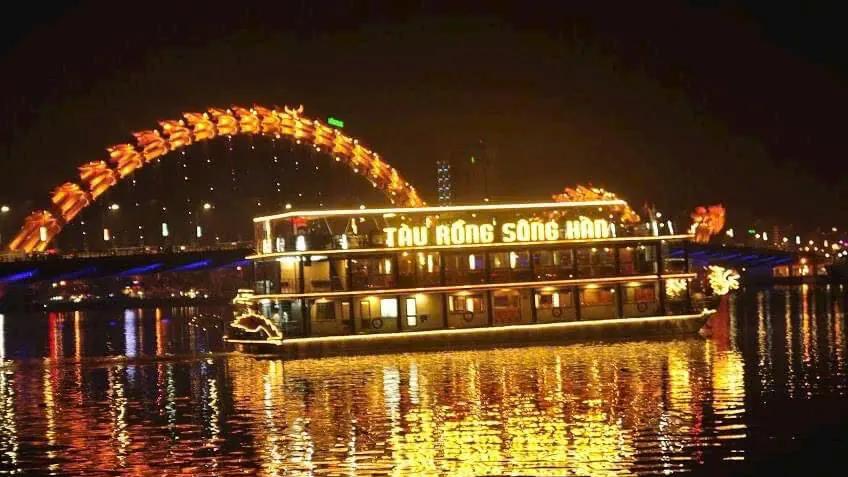
The Han River in Da Nang gives visitors a practical way to understand the city. Follow the water and you begin to see how bridges, streets and public spaces connect. A walk beside the river can also create a pause between larger excursions, with enough flexibility to suit an evening, a quiet morning or a shorter gap in the day.
For a first visit, the aim need not be to cover both banks or every bridge. Choose a manageable section and look carefully. The river becomes more informative when it is experienced as a place people use, rather than only as a background for the skyline.
Start with the river as a connection
Da Nang's development is closely tied to maritime access and commerce. The Han estuary forms part of that wider geographical story. Looking at the river today helps place the port history within a landscape that is still visible, even though the buildings and transport systems have changed.
For Tommy, whose background is in Hoi An, rivers provide a natural connection between different parts of Central Vietnam. The comparison should remain specific: Da Nang and Hoi An have distinct urban forms and histories. Their waterways offer a way to discuss those differences as well as their shared relationship with movement and exchange.
Bridges tell you how the city works
A bridge is a landmark for a visitor and a route for someone going to work. Watch the pattern of movement and the city becomes easier to read. The structures link everyday destinations that a sightseeing map may leave unnamed.
Dragon Bridge is especially recognisable, while Han River Bridge is another distinct crossing. The similarly named Love Bridge is a pier and does not connect the banks. Getting those names clear saves confusion when arranging a meeting point or choosing a walking route.
You can appreciate a crossing from the bank without needing to walk over it. Sometimes the broader riverside view explains the design more clearly than standing directly on the structure.
Choose one bank and a clear endpoint
For a straightforward evening, select a public stretch of waterfront and decide where you want to finish, perhaps near a meal or a planned pickup. This keeps the walk relaxed and avoids an unexpectedly long return. Road crossings and busy junctions deserve as much attention as the riverside distance.
On the eastern side near Dragon Bridge, the Carp Dragon Statue and Love Bridge make a compact group of stops. On another occasion, a walk on the opposite bank offers a different view of the same skyline. There is no need to combine every perspective into one outing.
Notice the change between daylight and evening
In daylight, you can read buildings, road connections and distant contours more easily. As darkness arrives, lit structures and reflections become more prominent. The water can make the same group of buildings feel like a different composition.
If you enjoy photography, use that change as your subject. Take one wider frame while the setting is still visible, then another when lights carry more of the image. You may learn more from comparing those views than from collecting many nearly identical photographs.
Keep in mind that weather and local events affect the atmosphere. A busy evening and a quiet one are both real experiences of the riverfront; neither is a permanent description of the place.
Leave room for ordinary life
Public waterfronts are shared by residents and visitors. Keep paths open, be considerate with cameras and let people continue their routines. Watching from a little distance often reveals more than moving directly into an activity.
A short rest can be useful too. Sitting by the water changes what you notice: the rhythm of traffic, people arriving and leaving, or how the skyline alters as the sky darkens. The walk does not become less valuable because you stop moving.
Build the river into a wider stay
The Han River can complement a morning at the Marble Mountains or a separate day exploring Hai Van. It gives you a lower, closer view after the scale of a mountain landscape. My Khe offers another kind of waterfront, with open sea rather than a river channel.
Tell Tommy where you are staying and how much walking feels comfortable. A clear start, an easy finish and a few well-chosen stops can make the Han River a memorable part of your Da Nang visit.
Frequently asked questions
Are Han River Bridge and Dragon Bridge the same?+
No. They are separate river crossings. Use the exact name when arranging transport or meeting a guide.
Do I need a cruise to enjoy the Han River?+
No. Public riverside areas offer views on foot. A cruise is a separate optional activity, with its own operator and schedule.
Which bank is best for a first walk?+
Choose according to the landmarks you want to see, your starting point and a convenient endpoint. The eastern area near Dragon Bridge groups several familiar stops together.