
Travel guide
Hoi An Ancient Town Through the Eyes of a Local

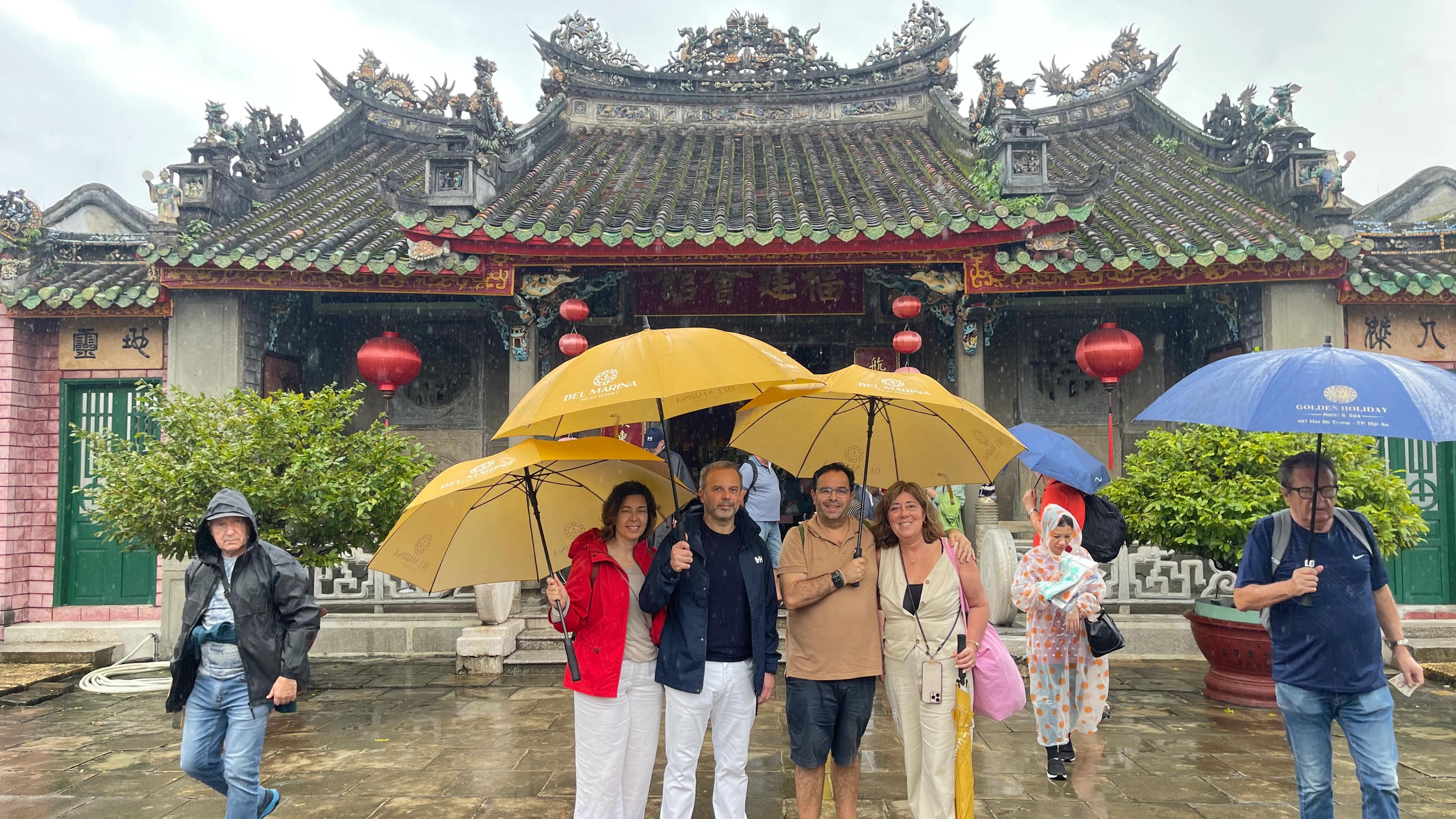
Hoi An Is My Hometown Before It Is a Destination
Hoi An is my hometown before it is a travel destination.
When many travelers first arrive here, they notice the yellow façades, colorful lanterns, narrow streets, old merchant houses and, of course, the Japanese Covered Bridge. These are beautiful parts of Hoi An, and I understand why people travel from around the world to see them.
But when I walk through these streets, I see something more personal.
I was born and raised in Hoi An. Long before I became a local guide, these streets, rivers and surrounding villages were simply part of my everyday life. I grew up seeing families working, small boats moving along the waterways, farmers in the countryside and traditional occupations that were still connected to daily life.
That is the Hoi An I want to share with my guests — not only a beautiful destination, but a place that is still lived in.
From an International Trading Port to a World Heritage Town
Hoi An developed as an important trading port between the 15th and 19th centuries. Its history brought together local Vietnamese traditions with influences from Chinese, Japanese and other overseas trading communities.
That cultural exchange can still be seen in the town's street plan, merchant houses, religious buildings, assembly halls and Japanese Covered Bridge.
In 1999, Hoi An Ancient Town was inscribed on the UNESCO World Heritage List under criteria (ii) and (v). UNESCO describes it as an exceptionally well-preserved traditional Asian trading port and an outstanding example of cultural exchange in an international commercial port.
But for me, the most interesting part is that Hoi An has never become simply an outdoor museum.
People still live here.
Families still worship their ancestors. Traditional festivals continue. Local dishes are still prepared and eaten. Crafts are still practiced. Religious buildings are still used by their communities.
This is why I often think of Hoi An as a living museum — a place where heritage can still be experienced as part of everyday life rather than something locked behind glass. UNESCO itself recognizes that Hoi An's living heritage continues to be preserved and passed on.
More Than 1,000 Historic Buildings — But Every Building Has a Human Story
One fact that surprises many visitors is the scale of Hoi An's surviving historic architecture.
UNESCO records a well-preserved complex of 1,107 timber-frame buildings, including homes, commercial buildings, religious structures, an open market and a ferry quay. Many buildings are arranged closely along narrow streets and retain traditional tiled roofs and wooden structures.
But numbers alone do not explain Hoi An.
When I enter an old house, I do not only see timber beams, roof tiles or an old façade.
I think about the people who lived there.
How did the family use the house? What did they trade? Why was the front connected to the street while the rear related to the river? How did architecture respond to commerce, family life, climate and flooding?
For me, these questions make architecture human.
The River Helps Explain Why Hoi An Exists
You cannot fully understand Hoi An without understanding its relationship with water.
The historic street layout reflects that connection. Streets developed both parallel and perpendicular to the river. Many traditional commercial buildings faced the street so customers could enter from the front, while their rear spaces opened toward the water, making it easier to load and unload goods from boats.
Today, visitors often experience the river through lantern boats and beautiful evening photographs.
For me, the river carries another layer of meaning: memory.
When I was young, I remember taking a small ferry across the water toward Cam Kim, where my grandparents lived. Sometimes I travelled with my bicycle. After reaching the other side, I would cycle through quiet village roads, passing rice fields, small boats and open countryside.
As a child, I never called this a "local experience."
It was simply life.
Today, those memories influence the way I guide.
I grew up with these streets, rivers and communities, and I try to share them as I experienced them — not as a memorized tour script.
Hoi An Does Not End at the Ancient Town
One of the ideas I most want visitors to understand is that Hoi An is bigger than its historic center.
The Ancient Town cannot be separated completely from the communities surrounding it.
Kim Bong helps us understand traditional woodworking, carpentry and boat-building skills.
Thanh Ha connects Hoi An with clay, pottery and traditional building materials.
Tra Que brings us closer to agriculture, herbs, vegetables and the people behind local food.
I have had opportunities to experience these communities directly rather than simply observing them from a distance.
At Tra Que, local farmers introduced me to how they cultivate the land and manage vegetable growing. At Thanh Ha, I had the chance to try pottery myself and watch knowledge being passed through generations. And Cam Kim is particularly personal to me because of my own family connection and childhood journeys across the river.
These experiences have taught me something important:
A place becomes easier to understand when we meet the people behind it.
What Many Visitors Miss About Hoi An
It is easy to photograph a lantern.
It takes more time to understand who made it.
It is easy to admire an old wooden house.
But the deeper question is where the craftsmanship came from.
It is easy to enjoy a bowl of local food.
But behind that meal are farmers, markets, ingredients, family recipes and generations of local knowledge.
This is where I believe a local experience becomes different from ordinary sightseeing.
When I guide people through Hoi An, I do not want to simply move from one attraction to another and repeat dates.
I want to connect the pieces:
river and trade, architecture and craftsmen, food and farmers, heritage and family life.
That connection is what makes Hoi An meaningful to me.
Hoi An Through My Eyes
I have watched Hoi An change as tourism has grown.
Today it is internationally known, busy and much more connected to the world than the Hoi An I remember from childhood.
But beneath that change, there is still another Hoi An.
You can find it early in the morning when the streets are quieter.
You can find it along the river.
You can find it in an old family house, in a workshop, in a vegetable garden, or in a conversation with someone who has spent a lifetime here.
That is the Hoi An I want my guests to discover.
Not only the famous landmarks.
Not only the photographs.
But the relationships between history, culture, craftsmanship, food, family and everyday life.
My hope is simple: when visitors leave Hoi An, I hope they take home more than beautiful pictures.
I hope they leave with context, understanding and a genuine connection to the people who continue to make Hoi An what it is today.