
Travel guide
Local Food in Hoi An: Taste the Town Like a Local

Local food in Hoi An: more than something to eat
When travelers first meet Hoi An, they usually see yellow walls, old wooden houses, lanterns and the river. I understand why. Those images are beautiful, and they are part of the town I grew up in. But when I guide people here, I often feel there is another map of Hoi An hidden in plain sight. You can taste it.
For me, local food is not a checklist of famous dishes. It is a way to connect the old town with the countryside, the market with the farm, the river with the kitchen, and a recipe with the hands that repeat it every day. A bowl of noodles can tell us where ingredients came from. A plate of herbs can take us back to the soil. A simple dessert can carry the memory of a riverside village or a trading community.
I do not want guests to remember only what they ate. I want them to remember who made it, where the ingredients came from, and why the dish belongs to this place.
That is the food story I want to tell: land, then ingredients, then people, then kitchen, then taste, then memory.
Food begins before the kitchen
On my countryside tours I often explain that herbs do not appear beside cao lau or mi Quang by accident. Somebody prepared the soil. Somebody managed the water. Somebody planted, watched, harvested and carried those ingredients onward. That is why a food tour becomes more meaningful when it is connected to the productive landscape around Hoi An.
Hoi An heritage research also describes local cuisine as the result of two forces working together: local ingredients and centuries of cultural exchange. Fresh produce, seafood, rice and water matter, but so does the history of a trading port where different communities met, adapted recipes and gradually made them part of local life.
So before we sit down at any table, I like to ask a simple question. Where did this come from, and whose work put it in front of us?
1. Cao lau: the urban dish of old Hoi An
If I had to choose one dish that feels closely tied to the old streets of Hoi An, cao lau would be near the top of the list. Its thick, firm noodles, pork, greens, crisp elements and concentrated sauce do not eat like a bowl of noodle soup. The texture matters as much as the flavor.
What interests me more than the ingredient list is the setting. Local heritage research makes a useful distinction: mi Quang is strongly associated with the rural Quang landscape, while cao lau developed a particularly strong relationship with the urban space of Hoi An. Historical recollections recorded by the local heritage authority show cao lau shops in the old town by the early twentieth century.
There are many popular stories about exactly where cao lau came from and what gives the noodles their distinctive character. Some local descriptions traditionally connect the dish with Tra Que herbs, Ba Le well water and ash from Cu Lao Cham. But the deeper origin of the dish and its name remains debated. I would rather tell guests that honestly than turn a good legend into a false certainty.
Cao lau helps me explain the town itself: old streets, local ingredients, adaptation and memory all arriving in one bowl.
2. Mi Quang: Quang Nam in a bowl
Mi Quang gives me a different story. Where cao lau pulls me toward the old town, mi Quang pulls me outward toward Quang Nam. The noodles, a modest amount of rich broth, herbs, peanuts and a crisp rice cracker create a dish that feels generous without needing a full bowl of soup.
In local speech, many people simply call it mi. The name mi Quang itself reflects the wider recognition of its Quang Nam roots. That makes it an ideal bridge between food and countryside: the bowl is not separate from the land.
In August 2024, the Ministry of Culture, Sports and Tourism included the folk knowledge of mi Quang in the national list of intangible cultural heritage. That matters to me not because a dish needs an official stamp, but because it confirms something I already feel. This is living knowledge, not just restaurant popularity.
When I talk about mi Quang, I think about the wider Quang landscape. The bowl is local, but the story is bigger than one street or one restaurant.
3. Hoi An chicken rice: familiar ingredients, local identity
Rice and chicken are not rare ingredients. That is exactly why Hoi An chicken rice is useful for storytelling. Local identity does not always depend on an exotic ingredient. It can come from technique, seasoning, herbs, texture, balance and repetition.
Different kitchens prepare com ga differently, so I avoid presenting one restaurant method as the universal recipe. What I want visitors to notice is the relationship between fragrant rice, chicken, herbs, onion, pickles, broth and sauce, and how a seemingly simple plate becomes recognizable as part of Hoi An's everyday food landscape.
A local dish does not need to be complicated. Sometimes the strongest identity comes from how ordinary ingredients are treated every day.
4. White rose, banh bao and banh vac: food shaped by hands
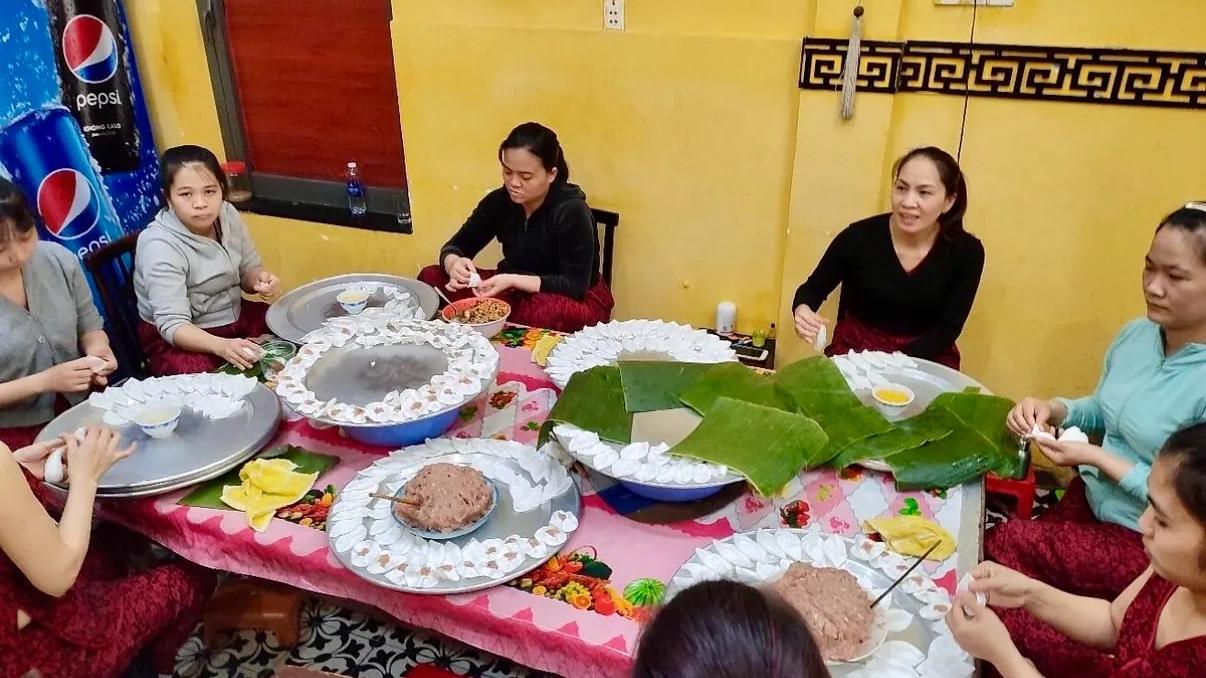
Banh bao and banh vac are often served together, and visitors frequently know the delicate white dumplings by the English nickname White Rose. For me, the strongest story is not the nickname. It is the handwork.
Rice dough must be prepared carefully, then shaped into small forms before steaming. Heritage descriptions show that the two dumplings use related techniques but different savory fillings, and recipe details can vary by household or producer. That variation is important. A living food culture is not a laboratory formula.
This dish connects naturally with the hands part of my countryside framework. Just as clay looks simple in the hands of an experienced potter, a dumpling fold can look effortless after years of repetition. Trying it yourself changes your respect for the movement.
The beauty of white rose is not only in the flower-like shape. It is in the practiced fingers that make the shape look easy.
5. Hoi An wontons: cultural exchange that became local
Wontons are useful because they let us talk about Hoi An as a trading town without forcing every dish into a romantic legend. Local heritage sources connect wontons with Chinese culinary influence brought by Chinese communities, while the dish developed a recognizable place on Hoi An menus.
I prefer the phrase "adapted into local life" rather than simply calling it Chinese food. That language respects the origin while also recognizing the generations of local cooks who changed ingredients, presentation and taste.
Hoi An's history is not only preserved in buildings. Sometimes cultural exchange survives in the way a familiar dish is cooked differently here.
6. Hoi An banh mi: outside influence, local everyday food
Banh mi belongs to Vietnam far beyond Hoi An, so I would never pretend the town invented it. The better question is what Hoi An does with a food form that came through wider historical contact.
A crisp baguette can hold pork, pate, herbs, cucumber, pickles, chili and house sauces in countless combinations. In Hoi An, specific vendors have become famous, but my angle is broader. A product of outside influence can become completely woven into local daily life.
Hoi An has always been good at receiving outside influences and making them part of everyday local life. Banh mi is an easy way to taste that idea.
7. Banh xeo: crisp batter, fresh herbs, shared eating
Banh xeo is a dish that asks you to use your hands. The crisp pancake is only one part of the experience. Herbs, rice paper wrappers and dipping sauce complete the rhythm of eating, and getting it wrong the first time is part of the fun.
This is another direct link to the countryside. Fresh herbs remind travelers that the food journey begins before the pan. Hoi An heritage material also treats banh xeo as part of local culinary practice while noting that pancakes exist across many Vietnamese regions.
The sound of a crisp banh xeo is memorable, but notice the herbs beside it. That is where the countryside enters the meal.
8. Banh dap and hen: Cam Nam's river food
To understand this food, I would start with Cam Nam rather than the plate. The island-like riverside landscape has long been associated with alluvial land, corn, clams, fish and other river products.
Banh dap gives texture, crisp and soft rice layers together, while clam dishes bring the river directly to the table. Heritage writing about Cam Nam specifically connects the area with banh dap, hen tron and local corn dishes.
This is exactly the kind of connection I want in a Hoi An food tour. Do not eat the clam first and ask about the river later. See the river, understand the local landscape, then taste the food with that context already in your head.
River, then clam, then the person who gathered it, then the kitchen, then family food. Once you see that chain, a small plate becomes a place story.
9. Che bap Cam Nam: dessert begins on the riverbank
Che bap is a gentle dessert, but its local story is strong. Heritage documentation links Cam Nam corn with fertile riverside alluvial land, describing the corn as fragrant, sweet and slightly rich in taste.
That lets me tell it from landscape to bowl. Before dessert comes the river. Before sweetness comes the field. It is a small example of why I do not separate food from countryside.
Before che bap becomes dessert, it begins as corn growing on land shaped by the river.
10. Xi ma: a small bowl of trading-port memory
Xi ma is black sesame sweet soup, traditionally eaten warm. It is quiet food: dark, soft and easy to overlook beside the more photogenic dishes of Hoi An.
That is exactly why I like its story. Heritage research explains that the name is connected with the Cantonese chi ma, and cautiously suggests that the dish may have entered Hoi An through Chinese merchant or Minh Huong communities during the trading-port period. Modern local practice has made it part of Hoi An's own food memory.
This is the language I want to keep: "may have", "is associated with", "local heritage research suggests". Careful wording makes the story more credible, not less interesting.
Some of Hoi An's biggest history lessons come in small portions. Xi ma lets us talk about migration, adaptation and memory in one warm bowl.
The best way to understand Hoi An food is to follow the connections
The point of this guide is not to decide which dish deserves first place. I would rather help travelers see the connections.
- Cao lau leads to old-town urban food culture
- Mi Quang leads to the Quang Nam landscape and living culinary knowledge
- Fresh herbs lead to farmers and the countryside
- Banh bao and banh vac lead to skilled hands and repetition
- Wontons and xi ma lead to cultural exchange and adaptation
- Banh dap, clams and che bap lead to Cam Nam, river ecology and local livelihoods
- Chicken rice and banh mi lead to everyday food becoming local identity
See it, taste it, learn it, meet the people behind it, connect the pieces. Food becomes more memorable when you understand the people and places behind it.
Taste Hoi An the local way
Walk beyond the menu and discover the stories behind the food. Taste local dishes, explore markets and neighborhood kitchens, and understand how farmers, river communities and generations of cooks shaped the flavors of Hoi An. If you want the countryside half of the story too, we can start in the fields and finish at the table.
The local way is the best way to travel.
Frequently asked questions
What food is Hoi An famous for?+
Hoi An is best known for cao lau, chicken rice, banh bao and banh vac (often called White Rose), wontons and banh mi, within a wider Quang food culture that includes mi Quang and banh xeo. Cam Nam adds riverside dishes such as clams, banh dap and sweet corn dessert.
Is cao lau originally from China or Japan?+
The exact origin of cao lau is still debated. Hoi An heritage research confirms its long association with the town but does not support treating any one popular origin theory as settled fact.
What is the difference between cao lau and mi Quang?+
They differ in ingredients, texture, serving style and cultural context. Heritage writing makes a useful distinction: cao lau is strongly tied to the urban old town, while mi Quang is rooted more broadly in the Quang Nam countryside and regional food culture.
What is White Rose in Hoi An?+
White Rose is the popular English nickname for Hoi An's delicate banh bao and banh vac dumplings. Their value lies not only in the flower-like shape but in the careful rice-dough preparation and hand shaping behind them.
Is Hoi An food influenced by other cultures?+
Yes. Hoi An grew as a trading port, and local heritage research describes a long process of culinary exchange and adaptation. Chinese and Western influences are visible in several dishes, but local cooks adapted them into Hoi An's own food landscape.
Where does the countryside fit into a Hoi An food tour?+
The countryside explains the ingredients. Herbs, rice, corn and river products all come from landscapes and livelihoods outside the restaurant. Understanding that chain makes the food experience far more meaningful.
What makes a local food tour feel authentic?+
Authenticity begins with people and context. See the place, taste the food, learn where it comes from, meet the people when it is appropriate, and connect each dish with the larger story of Hoi An.
Is mi Quang officially recognized cultural heritage?+
Yes. In August 2024 the Ministry of Culture, Sports and Tourism added the folk knowledge of mi Quang to Vietnam's national list of intangible cultural heritage, recognizing it as living local knowledge rather than simply a popular dish.